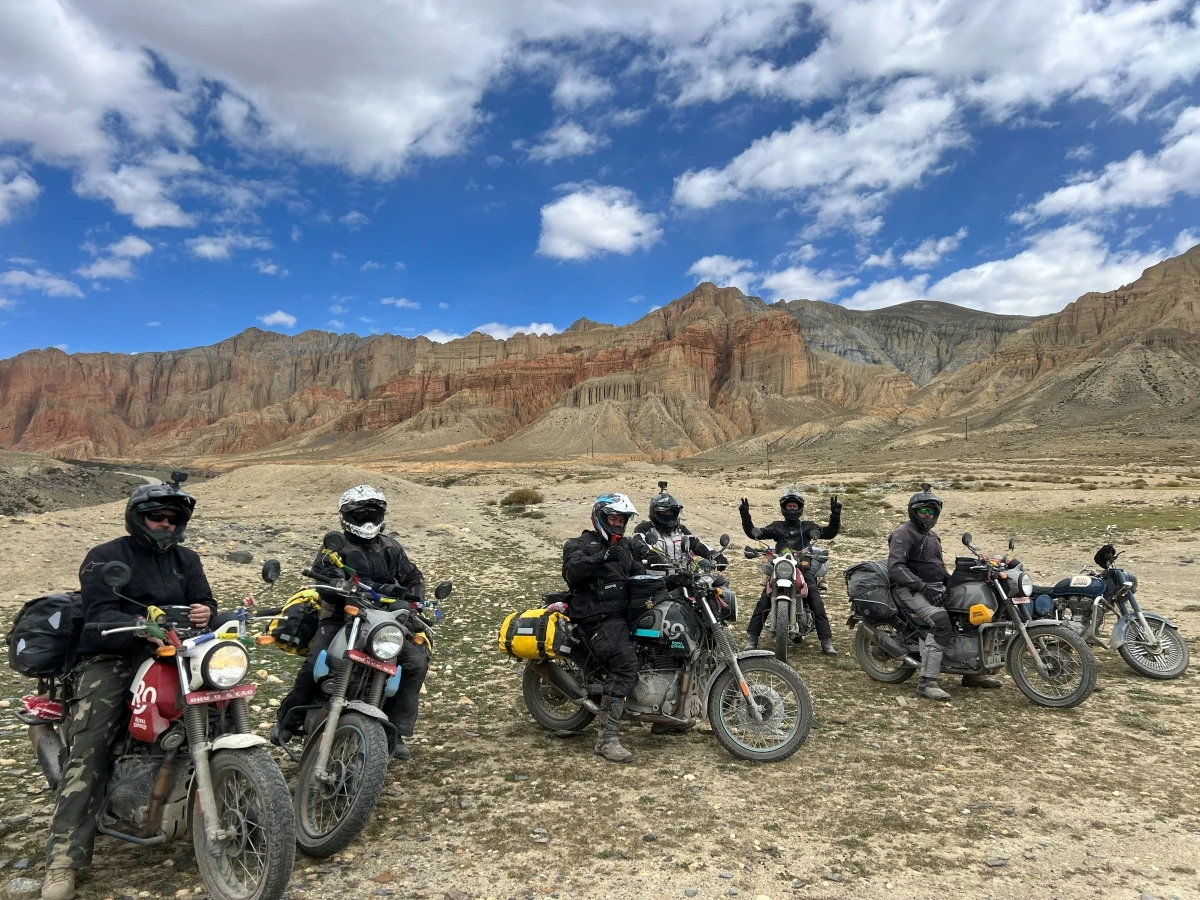
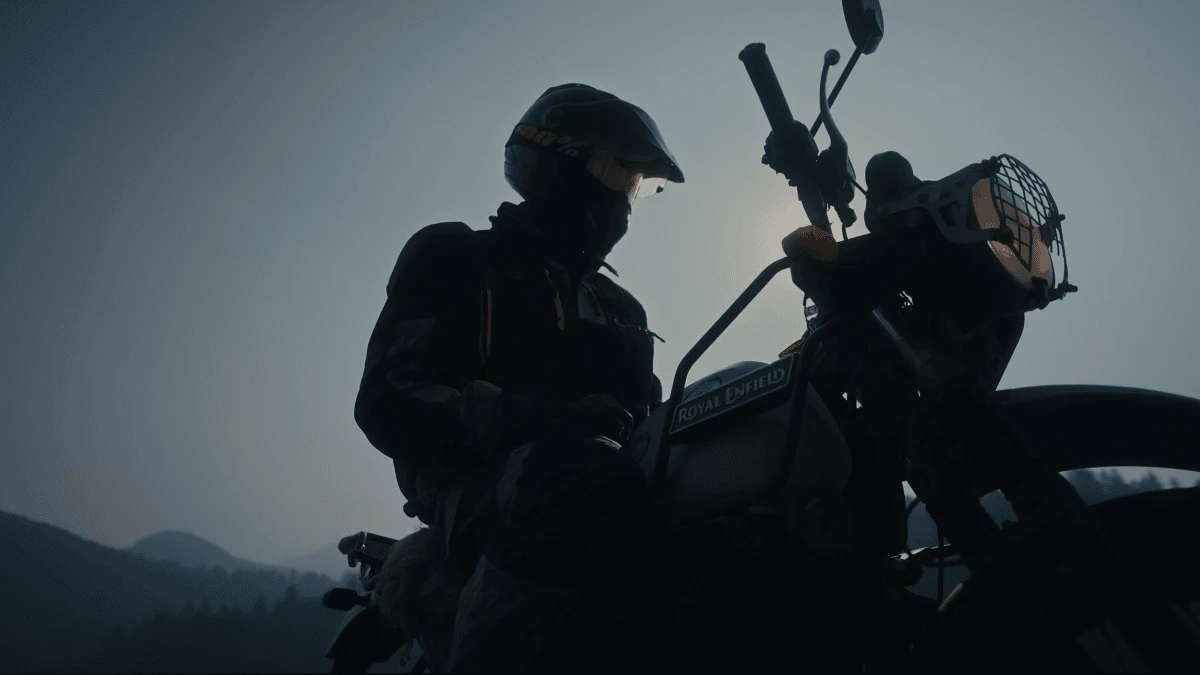
The 12-day Upper Mustang Motorbike Tour is a compact Himalayan expedition that combines long-distance riding, remote mountain terrain and cultural exploration. The route moves from the green middle hills of Nepal into the dry landscapes of the Kali Gandaki Valley and finally to the walled city of Lo Manthang before descending back toward Pokhara and Kathmandu.
1. A Changing Himalayan Landscape
One of the defining features of this journey is how dramatically the landscape changes during the ride. The route begins among green hills, terraced farmland and river valleys before entering the increasingly dry and rugged terrain of Mustang.
Beyond Kagbeni, the scenery changes to barren cliffs, exposed rock formations, wide river valleys and high-altitude desert landscapes. The return journey then brings another major transition as the route descends toward the greener hills and lower valleys.
2. The Character of the Ride
This is not a road-focused motorcycle holiday. The Upper Mustang section is the main riding challenge, with long stretches of gravel, loose stones, rocky surfaces, dust and uneven mountain tracks.
Riding speeds are generally slower on the rougher sections, and the condition of the road can have a greater effect on the day's progress than the distance shown on the itinerary. Riders should expect to stop regularly for photographs, local villages, viewpoints and changing road conditions.
3. The Kali Gandaki Valley
The journey follows the Kali Gandaki corridor as it climbs toward Mustang. This gives the tour considerable variety before and after the restricted area, including river valleys, mountain settlements, suspension bridges, waterfalls and dramatic Himalayan scenery.
The route is therefore more than a ride to Lo Manthang. The approach through the Kali Gandaki Valley forms an important part of the overall motorcycle experience.
4. Lo Manthang and Cultural Exploration
Lo Manthang is the cultural centerpiece of the tour. The exploration day provides time to walk through the historic walled city and visit important cultural and religious sites.
Depending on local conditions and the day's arrangements, exploration can include ancient monasteries, the former Royal Palace, traditional settlements and the cave area around Chhoser. Visitors should respect local customs when entering monasteries and religious sites and should ask permission before photographing people.
5. Riding Pace and Daily Distances
The itinerary combines several moderate riding days with longer days on the approach to and return from Upper Mustang. Distance alone does not indicate how demanding a day will be because surface conditions, elevation, wind and road repairs can significantly affect riding time.
The schedule may therefore feel different from a normal road trip where a fixed distance can be covered quickly.
6. Accommodation Style
Accommodation changes as the route moves farther from the major cities. Kathmandu, Bandipur and Pokhara offer a wider range of facilities, while accommodation in Mustang is generally simpler and more locally oriented.
Remote guesthouses may have fewer facilities and less consistent hot water, heating and electricity. This is part of traveling through a region where tourism infrastructure remains limited compared with Nepal's major cities.
7. Food Along the Route
Food options become simpler as the journey moves deeper into the mountains. Local restaurants and guesthouses commonly provide familiar Nepali and Tibetan-influenced meals as well as basic options suitable for travelers.
Because riding days can be long, eating regularly and carrying water during the day's ride is useful, particularly once the route reaches the drier Mustang landscape.
8. Wind and Dry Conditions
The upper Mustang landscape is notably dry and exposed. Strong winds are common in the Kali Gandaki and Mustang valleys, particularly later in the day, and dusty conditions can occur on unpaved roads.
Eye protection is particularly useful when riding behind other motorcycles or vehicles. A buff or face covering can also help with dust and wind.
9. Preparing for Changing Temperatures
Temperatures can vary considerably between the lower valleys and the higher Mustang settlements. Early mornings and evenings can be cold even when daytime riding conditions are comfortable.
Layering is therefore more practical than relying on one heavy jacket. Riders should be prepared to add or remove layers during the day as elevation and weather change.
10. Motorcycle Preparation and Support
Motorcycles used for this route need to be suitable for prolonged riding on rough mountain surfaces. Before entering the more demanding sections, the motorcycle should be checked for tires, brakes, chain, fluids and other essential components.
Himalayan Eco Ride provides mechanical assistance during the expedition, allowing routine checks and unexpected mechanical issues to be handled with local support.
11. Communication and Power
Connectivity becomes less dependable as the route moves into remote Mustang. Riders should not rely on continuous mobile coverage or internet access throughout the journey.
Charge essential devices whenever facilities are available and carry a power bank for your phone, camera or other equipment used during the ride.
12. Travel Documents and Personal Equipment
Keep your passport and important travel documents secure and easily accessible during the journey. Your riding equipment should be appropriate for both off-road conditions and cold mountain weather.
A practical personal kit includes protective riding gear, warm layers, waterproof protection, gloves, sturdy riding boots, sunglasses, sunscreen, personal medication and a reusable water bottle.
13. Route Changes in the Mountains
Mountain routes are affected by conditions that can change from day to day. Road work, landslides, weather, local access and other circumstances can occasionally require the day's riding plan to be adjusted.
Any changes are made according to the conditions on the ground while keeping the main route and overall purpose of the expedition in view.