Annapurna Circuit Trek: The Complete Himalayan Circle

The Annapurna Circuit Trek is widely regarded as one of the most diverse and complete trekking experiences anywhere in the Himalayan world. Unlike point-to-point base camp treks, this journey encircles the entire Annapurna massif, moving through multiple climatic zones, ethnic communities, and radically different landscapes in a single continuous arc. From the subtropical lowlands of central Nepal to the wind-sculpted valleys of the Mustang rain shadow, no other trek in Nepal delivers such variety in thirteen days.

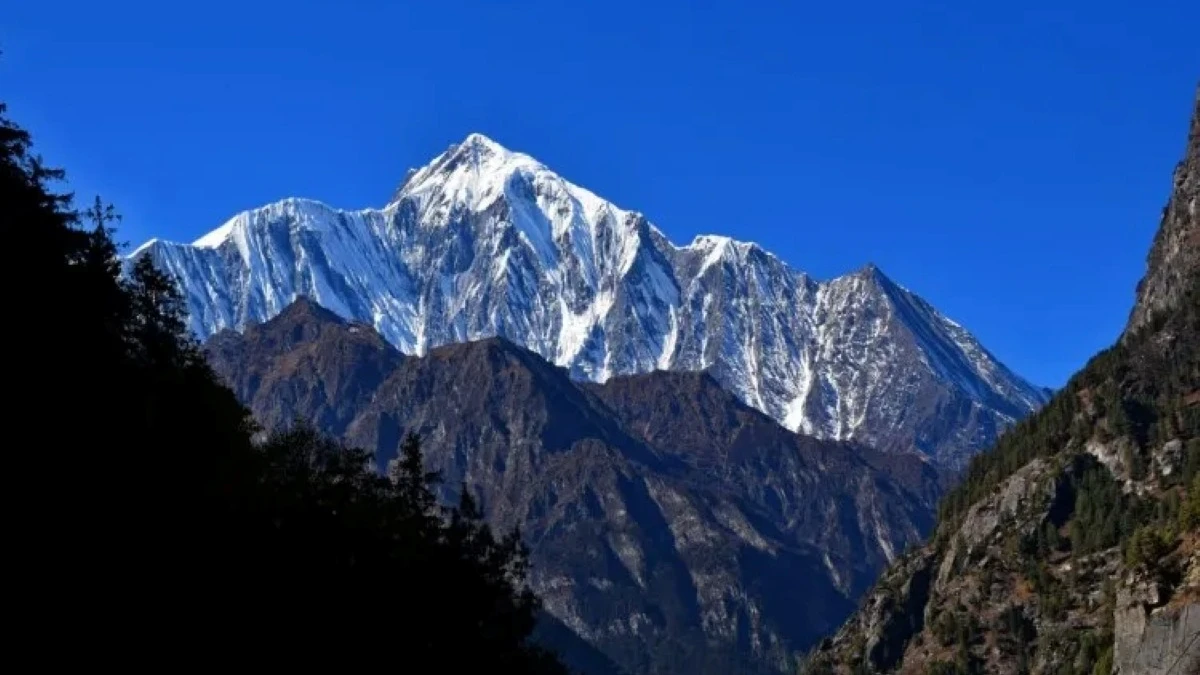
The route follows the Marsyangdi River northward through terraced farmland, cascading waterfalls, and dense forest before ascending into the high Tibetan plateau world of the upper Manang district. As elevation increases, vegetation thins, the air becomes crisp and dry, and the mountains grow steadily closer and more imposing. Annapurna I, Annapurna II, Annapurna III, Gangapurna, Dhaulagiri, Machhapuchhre, Manaslu, and Pisang Peak all make their presence felt at different stages of the circuit, and the cumulative effect of walking among peaks of this scale and variety across thirteen days is something genuinely transformative.

This trek is not just about crossing a pass. It is about the journey itself: driving into the deep Marsyangdi gorge, walking through rhododendron forest and ancient stone villages, sitting in a teahouse in Manang with glaciers visible directly above the rooftops, and then pushing across the highest trekking pass in the world above 5,000 meters before descending into the arid, amber-coloured valley world of Mustang and arriving at the sacred flame of Muktinath.

The Journey Through the Marsyangdi Valley

The circuit begins in the humid, green lowlands near Besisahar and follows the Marsyangdi River upstream through one of the most dramatically evolving landscapes in Nepal. In the early days, the trail passes through Gurung and Magar villages where Hindu traditions and terraced agricultural life define the character of every settlement. Forests of rhododendron, oak, bamboo, and pine line the trail, and cascading waterfalls drop from cliffs that tower above the gorge.

As the valley narrows and deepens, the first major landmarks begin to appear. The enormous curved rock face of Paungda Danda soars nearly 1,500 meters above the river, one of the most striking geological features on any trek in the Himalayas. Chame, the administrative headquarters of Manang district, offers the first clear views of Annapurna II and the scale of the peaks to come. The apple orchards and stone-built settlement of Brathang, Upper Pisang with its ridge-top monastery, and the high-trail villages of Ghyaru and Ngawal all deliver panoramic views and cultural richness that grow steadily deeper with every day of walking.

Manang, at 3,519 meters, is the heart of the upper circuit. This well-established high-altitude town, with its ancient Braga Gompa nearby, its glacier views, its bakeries and lodges, serves as the essential acclimatization base before the circuit's defining moment.

Crossing Thorong La Pass

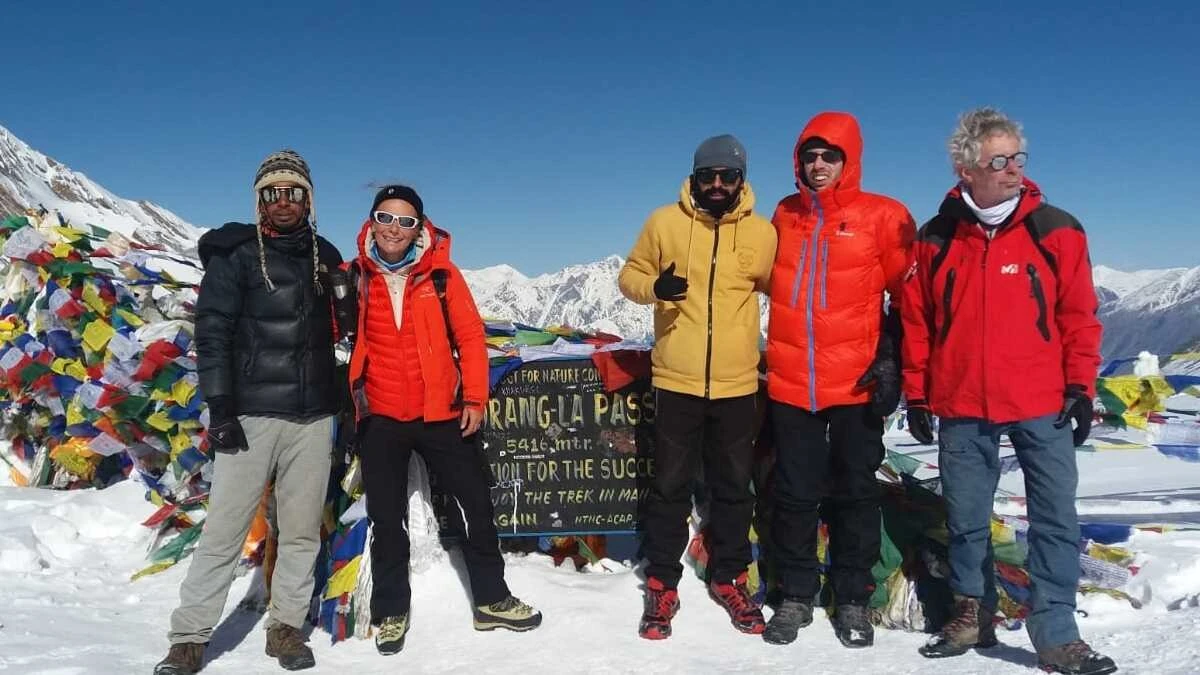
The undisputed centrepiece of the entire circuit is the crossing of Thorong La Pass at 5,416 meters, the highest point of the trek and one of the great high-altitude pass crossings in Himalayan trekking. The ascent begins well before dawn from Thorong Phedi, with headlamps cutting through cold, still air as the trail climbs steadily in darkness and silence. The altitude makes every step deliberate and the effort cumulative. Patience and a steady pace are everything on this morning.

As the sky lightens and the pass draws closer, the surrounding peaks emerge one by one in the growing light, their snow-covered faces turning gold and then white as the sun rises. Reaching the prayer flags and cairns at the summit of Thorong La is a genuine achievement, earned through both preparation and physical commitment, and the panoramic views from the top stretch across the Annapurna range, the Dhaulagiri massif, and the vast arid landscape of Mustang below.

The descent from the pass is long and steep, dropping through a completely transformed landscape into the dry, wind-carved valleys of the Mustang region. At the bottom of this descent lies Muktinath, one of the most sacred sites in all of Nepal, revered equally by Hindus and Buddhists, where an eternal flame burns beside water spouts in a temple compound that has drawn pilgrims across mountain passes for centuries.

Culture, Landscape, and Experience

The Annapurna Circuit offers the most culturally layered trekking experience in Nepal. The lower villages, inhabited by Gurung and Magar communities, carry the warmth and green abundance of the middle hills. As the trail climbs into Manang district, the cultural character shifts completely toward Tibetan Buddhism, visible in every mani wall, chorten, prayer wheel, and flat-roofed stone house along the way. Braga's ancient gompa, the largest in the entire Manang region, is a landmark of genuine historical importance.

After crossing Thorong La and descending into the Mustang valley world, the landscape changes one final time into the extraordinary arid terrain of the Kali Gandaki gorge, the deepest gorge in the world, where the river runs between Annapurna and Dhaulagiri in a canyon of extraordinary scale. The drive out through Jomsom and Tatopani toward Pokhara follows this gorge, offering one final, extended farewell to the mountains.

Wildlife is a genuine presence throughout the circuit. Blue sheep are regularly spotted on the high ridges above Manang. Langur monkeys inhabit the lower forests. And the snow leopard, rarely seen but always present in the high terrain, haunts the rocky slopes above Thorong Phedi.

Completion and Return

After the Muktinath visit and the long descent into the Mustang landscape, the circuit continues by jeep along the Kali Gandaki River through Jomsom and Tatopani, following the course of one of the great Himalayan gorges toward Pokhara. The gradual return of green hills and warmer air marks the transition from the high plateau world back into the subtropical Nepal that began the journey.

A short scenic flight from Pokhara to Kathmandu, with aerial views of the Himalayan ranges laid out to the north, brings the circuit to a visually fitting close. The contrast between the mountain world you have moved through for thirteen days and the city you return to is immediate and striking, and the memory of what the circuit offered, in its full range and variety, settles gradually in the days that follow.

Conclusion

The Annapurna Circuit Trek is the most complete Himalayan trekking experience available in Nepal: a journey that moves through every climatic zone, two distinct cultural worlds, and a landscape of extraordinary and constantly changing beauty, from the lush gorges of the Marsyangdi to the stark heights of Thorong La and the sacred valley world of Mustang. It is suitable for trekkers with good fitness, previous hiking experience, and a genuine desire to experience the full diversity of what the Himalayan world can offer.

With proper acclimatization, experienced guidance, and well-organized logistics, this 13-day circuit delivers everything a complete Himalayan journey should: physical challenge, cultural depth, natural beauty, and a defining moment at altitude that stays with you permanently. The Annapurna Circuit is not simply one of the great treks. It is one of the great journeys in the world.

Highlights

  • Cross Thorong La Pass (5,416 m), one of the highest trekking passes in the world, with panoramic sunrise views over the Annapurna range, Dhaulagiri, and the vast Mustang landscape stretching below.
  • Visit Muktinath Temple (3,800 m), one of the most sacred sites in Nepal, revered by both Hindus and Buddhists, where an eternal flame and sacred water spouts have drawn pilgrims across the mountains for centuries.
  • Acclimatize in Manang, the cultural heart of the upper circuit, with a hike to Gangapurna Lake and sweeping views of Annapurna III, Gangapurna Glacier, and the high peaks directly above the town.
  • Trek through the full cultural transition from Gurung and Magar Hindu communities of the lower Marsyangdi valley to the Tibetan Buddhist world of the upper Manang district, where ancient monasteries, mani walls, and chortens define every settlement.
  • Walk past the enormous curved rock face of Paungda Danda, one of the most striking geological landmarks on any trek in the Himalayas, soaring nearly 1,500 meters above the river.
  • Enjoy a panoramic mountain panorama throughout the route featuring Annapurna I, II, III, and IV, Gangapurna, Dhaulagiri, Machhapuchhre, Manaslu, Pisang Peak, and the full scale of the Annapurna massif.
  • Experience the dramatic descent from Thorong La Pass into the arid, wind-sculpted landscape of the Mustang region, where the terrain transforms completely within a single day of walking.
  • Drive through the Kali Gandaki Gorge, the deepest gorge in the world, running between the Annapurna and Dhaulagiri massifs in a landscape of extraordinary geological and visual scale.
  • Visit Braga, a Tibetan village with architecture built one house upon another up the hillside, and its ancient Braga Gompa, the largest monastery in the entire Manang region.
  • Trek through diverse and constantly shifting landscapes from subtropical forest and terraced farmland in the lower valley through alpine terrain, glacial viewpoints, and the barren high-altitude world above 4,500 meters.
  • Encounter wildlife including blue sheep on the high ridges above Manang, Langur monkeys in the lower forests, and the occasional sighting opportunity for snow leopard in the rocky terrain above Thorong Phedi.
  • Complete a full 13-day circuit with a well-structured acclimatization day in Manang and a carefully paced ascent, ensuring safe passage over the highest point while maximising the scenic and cultural experience of every stage.
Itinerary

Nepal's Annapurna Circuit is one of the most celebrated trekking routes in the world, and for good reason. This 13-day journey takes you around the entire Annapurna massif through a landscape that shifts more dramatically, more completely, and more beautifully than on any other trek in Nepal. From the subtropical gorges of the lower Marsyangdi through the ancient Tibetan Buddhist villages of the upper circuit, over Thorong La Pass at 5,416 meters, and down into the sacred arid valley world of Mustang, every section of the route delivers something entirely different from what came before.

The route follows a clear and satisfying logic: a long, gradual ascent through increasingly dramatic terrain, a defining moment at the highest point of the trek, and a descent into a completely different cultural and geographic landscape before the return to Pokhara and Kathmandu. Along the way, the transition from the Hindu traditions of the lower Gurung and Magar villages to the Tibetan Buddhist culture of the upper circuit is one of the most profound cultural experiences available on any trek anywhere in the Himalayan world. Monasteries, mani walls, prayer wheels, and chortens become the dominant architectural language of the trail as altitude increases, and the people of the upper circuit carry a self-sufficiency and quiet warmth that the remoteness of their world has shaped over centuries.

This 13-day itinerary is carefully structured around a gradual ascent, a proper acclimatization day in Manang, and a steady approach to Thorong La Pass that prioritises both safety and the full enjoyment of every section of the route. It is designed for trekkers who want to experience the complete circuit in its most rewarding and time-efficient form, without sacrificing any of the landscape, culture, or altitude that make the Annapurna Circuit one of the greatest journeys on earth.

You arrive in Kathmandu, where our team meets you at Tribhuvan International Airport and transfers you to your hotel in Thamel. The rest of the day is free to recover from travel, explore the nearby temples and market lanes, or complete any final gear preparations.

In the evening, your trek guide conducts a full briefing covering the circuit route, altitude awareness, permit requirements, safety protocols, and the cultural character of the regions you will pass through. This is also the time to confirm your packing, check all documents, and ensure everything is in order before the early departure the following morning.

  • Meals: Dinner
  • Accommodation: Hotel in Kathmandu

This day is reserved for both cultural exploration and practical preparation before heading into the mountains. A guided visit to Kathmandu's UNESCO World Heritage Sites provides important context for the journey ahead: the great stupa of Boudhanath, the Pashupatinath temple complex on the banks of the Bagmati, and the hilltop shrine of Swayambhunath each represent aspects of the cultural and spiritual world you will encounter in a different form on the trail.

In the afternoon, an equipment check ensures your gear is complete and appropriate for the altitude and conditions of the circuit. Any remaining items can be sourced from Thamel's well-stocked trekking shops. The evening is free to rest and prepare mentally for the journey that begins with an early departure the following morning.

  • Meals: Breakfast, Dinner
  • Accommodation: Hotel in Kathmandu

Your journey into the Annapurna region begins with a long but scenic drive out of Kathmandu, following the Trishuli River westward before turning north into the Marsyangdi Valley. The road passes through rural market towns, terraced hillsides, and river valleys that widen and narrow with the changing topography, offering a continuous and unhurried introduction to the landscapes of central Nepal.

Besisahar, reached after approximately seven to eight hours of driving, is the traditional gateway to the Annapurna Circuit and the last sizeable town before the mountains begin in earnest. The evening here is calm and straightforward, a final night at low altitude before the long climb begins.

  • Max Altitude: 760 m
  • Meals: Breakfast, Lunch, Dinner
  • Accommodation: Teahouse in Besisahar
  • Duration: Drive: 7–8 hrs

Today's drive carries you deeper into the heart of the Marsyangdi gorge on roads that grow progressively rougher and narrower as the mountains close in on both sides. The route passes through Syange and Tal, the first village in the Manang region, before continuing through Dharapani and Danakyu, a Tibetan-influenced settlement with its characteristic flat stone-roofed houses that signals the first cultural shift of the circuit.

The landscape changes noticeably as altitude increases. Subtropical greenery gives way to pine forest and steep rocky gorges, and waterfalls cascade from towering cliffs above the road. By the time you reach Chame, the administrative headquarters of Manang district, the first clear views of Annapurna II and Lamjung Himal have appeared above the treeline and the mountain world has taken full possession of the horizon.

  • Max Altitude: 2,710 m
  • Meals: Breakfast, Lunch, Dinner
  • Accommodation: Teahouse in Chame
  • Duration: Drive: 6–7 hrs

The trekking portion of the circuit begins today, and it opens immediately with one of the most visually dramatic sections of the entire route. The trail follows the Marsyangdi through a steep and narrow gorge where the enormous curved rock face of Paungda Danda soars nearly 1,500 meters vertically above the river, a geological spectacle on a scale that leaves most trekkers pausing in genuine disbelief.

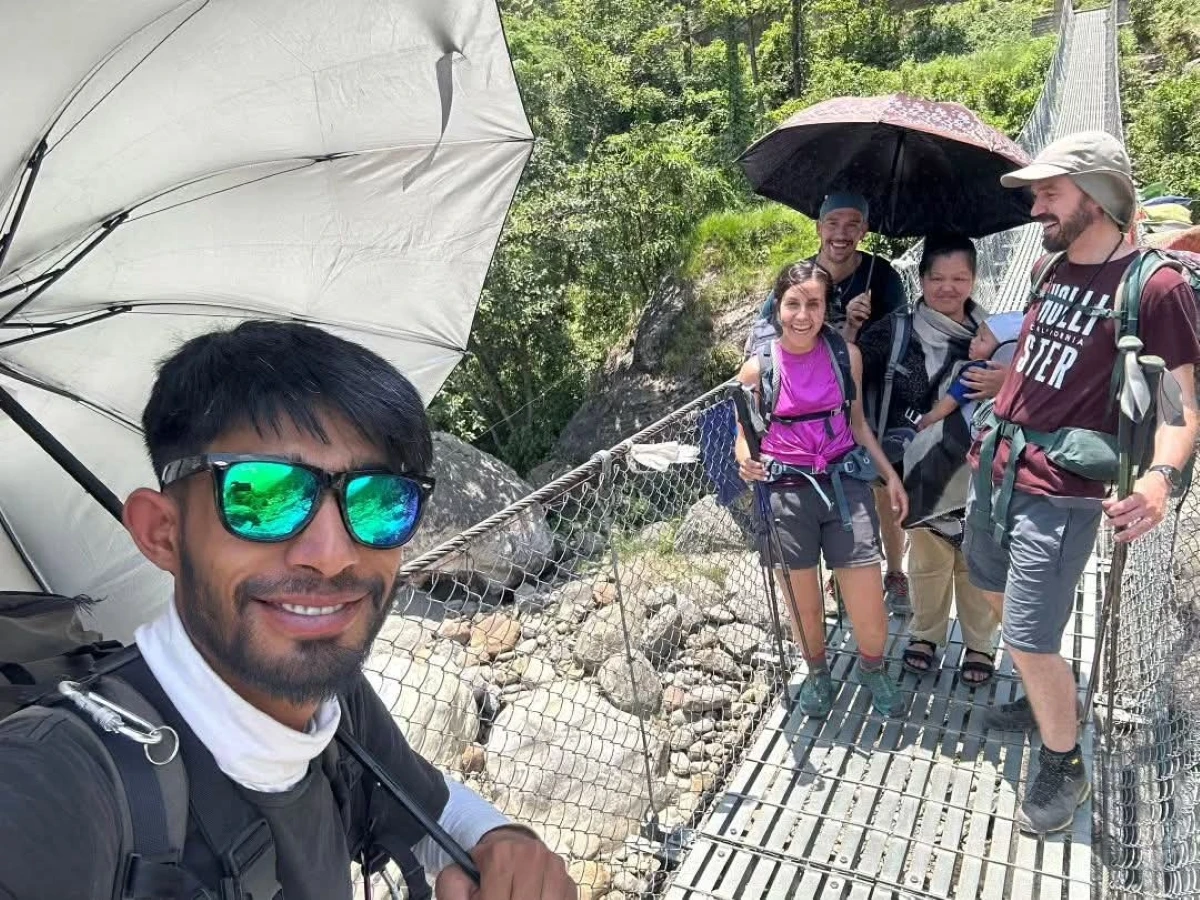
Beyond Paungda Danda, the valley widens and the views open further. Apple orchards at Brathang offer a memorable and unexpected interlude, with fresh fruit available directly from the trees in season. Suspension bridges carry the trail over the river, and the first chortens and prayer wheels of the upper circuit begin to appear among the pine trees. Upper Pisang sits on a high ridge with sweeping views of Annapurna II, Gangapurna, and the full width of the valley, and the small monastery on the ridge above the village is worth the extra minutes of climbing for the panorama it commands.

  • Max Altitude: 3,300 m
  • Meals: Breakfast, Lunch, Dinner
  • Accommodation: Teahouse in Upper Pisang
  • Duration: Trek: 5–6 hrs

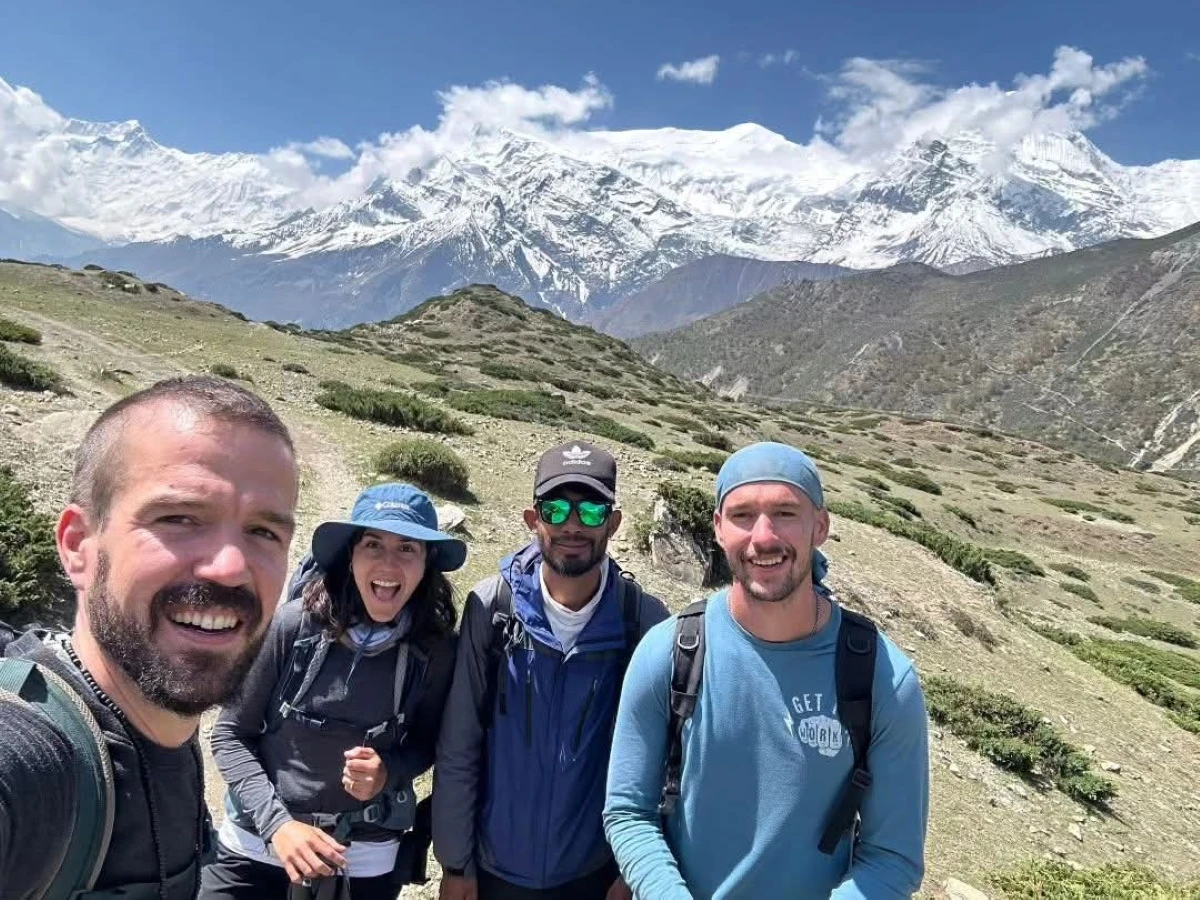
Today's route follows the higher trail via Ghyaru and Ngawal rather than the valley floor, and the additional effort is rewarded many times over. The high trail climbs steeply from Upper Pisang before levelling onto an open hillside where the full panorama of the upper Manang valley is visible in every direction: Annapurna II, Annapurna III, Gangapurna, and the Annapurna Glacier all visible simultaneously in a view that ranks among the finest of the entire circuit.

Ghyaru and Ngawal are small, traditional villages with ancient stone architecture, prayer wheels, and mani walls that reflect the Tibetan Buddhist character now firmly established as the dominant culture of the upper trail. Beyond Ngawal, the route descends gently to Braga, home to the largest and oldest monastery in the entire Manang region, a building of genuine historical importance perched above a village of houses stacked one upon the other up the hillside. From Braga, Manang is thirty minutes further along a flat, open track.

  • Max Altitude: 3,519 m
  • Meals: Breakfast, Lunch, Dinner
  • Accommodation: Teahouse in Manang
  • Duration: Trek: 6–7 hrs

This rest and acclimatization day is one of the most important of the entire circuit. The body's adjustment to altitude above 3,500 meters is not something to rush, and Manang provides both the necessary time and the ideal environment to do it well.

Rather than remaining idle, the day is spent in active acclimatization following the principle of climbing high and sleeping low. A hike to Gangapurna Lake, a glacial lake at approximately 3,600 meters formed by runoff from the Gangapurna and Annapurna IV glaciers, is the primary option, with the viewpoint above the lake offering a sweeping panorama of the valley and the surrounding peaks that gives a powerful sense of how high the circuit has already brought you. The afternoon is free to explore Manang's tea shops, visit the small local museum, attend the daily altitude awareness talk offered by Himalayan Rescue Association doctors in season, or simply rest and rehydrate. The town rewards unhurried time.

  • Max Altitude: 3,519 m
  • Meals: Breakfast, Lunch, Dinner
  • Accommodation: Teahouse in Manang

The trail leaves Manang and enters a new world immediately. Above the treeline, the landscape becomes open, windswept, and spare, with the lush green of the lower valley replaced entirely by high-altitude grassland, hardy scrub, and open rocky terrain where yak herds graze on the exposed slopes. The air becomes noticeably thinner with every hour of walking, and the natural pace slows to something more deliberate and more attuned to the altitude.

Blue sheep are sometimes visible on the distant hillsides, their grey-brown colouring barely distinguishable against the rocky terrain. The peaks above the valley grow more imposing as you gain height, and the sense of exposure and openness that defines the high Himalayan world settles fully into the experience. Yak Kharka is a small settlement used primarily as a staging point for the pass, and the evening here is cold, quiet, and genuinely high-altitude.

  • Max Altitude: 4120 m
  • Meals: Breakfast, Lunch, Dinner
  • Accommodation: Teahouse in Yak Kharka
  • Duration: Trek: 4–5 hrs

A gradual but steady ascent over rocky terrain leads to Thorong Phedi, the name meaning literally "foot of the hill," and the small settlement lives up to its purpose entirely: this is base camp for the pass crossing. The landscape here is barren and windswept, stripped back to rock and thin soil, and the scale of the terrain above Thorong Phedi makes the challenge of tomorrow's crossing visible and real.

The afternoon is short and the evening is intentionally early. Dinner comes before dark, packing is done carefully, and sleep comes as soon as possible. Tomorrow requires a pre-dawn start, and the body needs every hour of rest it can find at this altitude. The night at Thorong Phedi is characterised by anticipation, cold, and the quiet focus that the morning demands.

  • Max Altitude: 4,560 m
  • Meals: Breakfast, Lunch, Dinner
  • Accommodation: Teahouse in Thorong Phedi
  • Duration: Trek: 4–5 hrs

This is the most demanding and most extraordinary day of the entire circuit. The start comes well before dawn, at approximately 4:00 AM, with headlamps and cold silence as the trail begins its long climb toward the pass. The ascent is steady, relentless, and deeply satisfying in its demands. At this altitude, every step requires conscious effort, and the pace becomes something meditative and internal.

As the sky lightens and the pass draws closer, the mountain world opens around you in every direction. The snow-covered peaks of the Annapurna range illuminate one by one in the growing light, and the vast Mustang landscape below the pass appears gradually through the thinning air. Reaching the prayer flags and cairns at the summit of Thorong La (5,416 m) is one of the defining moments of Himalayan trekking, a genuine physical and personal achievement reached through preparation, persistence, and the accumulated effort of the days before.

The descent from the pass is long, steep, and takes you into a completely different world. The arid, amber-coloured terrain of Mustang unfolds below as you drop through the pass's western side, and by the time the trail levels toward Muktinath, the landscape bears no resemblance to what you left behind on the eastern approach. Muktinath Temple, sacred to both Hindus and Buddhists, stands at the end of the descent, its eternal flame and sacred water spouts creating an atmosphere of genuine spiritual significance that draws pilgrims from across the subcontinent.

  • Max Altitude: 5,416 m
  • Meals: Breakfast, Lunch, Dinner
  • Accommodation: Teahouse in Muktinath
  • Duration: Trek: 8–9 hrs

The final trekking is behind you, and today begins the long but rewarding drive back toward Pokhara through one of the most dramatic gorge landscapes in the world. The route follows the Kali Gandaki River downstream through Jomsom and the arid, wind-sculpted terrain of lower Mustang before entering the greener middle hills at Tatopani, where the famous natural hot springs offer a perfect opportunity to stop and ease tired muscles.

As the drive continues south, the landscape transforms: the bare stone and dust of Mustang gives way to terraced farmland, then subtropical greenery, then the warm, open valley approach to Pokhara. Reaching the lakeside city after the stark high-altitude world of the previous days feels like arriving in a different country entirely, and the calm of Fewa Lake and the Lakeside area provides a deeply welcome close to the day.

  • Max Altitude: 822 m
  • Meals: Breakfast, Lunch, Dinner
  • Accommodation: Hotel in Pokhara
  • Duration: Drive: 7–8 hrs

A short mountain flight from Pokhara to Kathmandu closes the circuit with one of the finest aerial views in Nepal. From the aircraft window, the Annapurna range, the Dhaulagiri massif, and the high ridgelines of the circuit you have just completed are all visible in one sweeping panorama, a final, elevated farewell to the mountains that have defined the past twelve days.

You arrive in Kathmandu by late morning, where our team transfers you to your hotel. The rest of the day is free to rest, explore the city, shop in Thamel, or visit the heritage sites you did not have time for at the journey's start. The circuit is complete, and the satisfaction of having moved through the full range of what the Annapurna world offers settles quietly and permanently.

  • Meals: Breakfast, Lunch
  • Accommodation: Hotel in Kathmandu
  • Duration: Flight: 25 min

Your Annapurna Circuit Trek officially concludes today. Our team will arrange your transfer to Tribhuvan International Airport at the appropriate time based on your flight schedule. Please ensure you arrive at least three hours before departure.

If time permits before your flight, a final morning walk through the temple courtyards of Kathmandu or a last cup of coffee in Thamel is a fitting way to close the journey. As you leave Nepal, carry with you the full arc of what the circuit offered: the gorges, the orchards, the monasteries, the high ridges above Manang, the cold before dawn at Thorong Phedi, and the view from the pass with the Himalayan world stretching away on both sides. The Annapurna Circuit earns its reputation completely. It is one of the great journeys in the world.

  • Max Altitude: 1,400 m
  • Meals: Breakfast
  • Accommodation: Hotel in Kathmandu (if departing next day)
Unable to locate what you're seeking?

Reach out to our travel experts.

Cost Details
Includes
  • Airport pickup and drop-off in Kathmandu on a private vehicle.
  • All ground transportation required during the trek, including Kathmandu to Besisahar, Muktinath to Pokhara via Jomsom and Tatopani, and flight or bus Pokhara to Kathmandu.
  • Experienced trekking guide and porter services, including salaries, insurance, meals, and accommodation throughout the journey.
  • Full logistics arrangement for the entire 13-day circuit.
  • Accommodation in teahouses and lodges during the trek, and hotel stays in Kathmandu and Pokhara.
  • All meals during the trek (Breakfast, Lunch, and Dinner).
  • Required trekking permits including the Annapurna Conservation Area Permit (ACAP) and Trekkers Information Management System (TIMS) card.
  • First aid support and basic medical kit during the trek.
  • Arrangement of emergency helicopter service (covered by your travel insurance).
  • All government taxes and official expenses including 13% VAT
Excludes
  • Nepal tourist visa fee.
  • International flight tickets and departure taxes.
  • Travel insurance covering trip cancellation, medical expenses, rescue, and emergency evacuation (mandatory for this trek).
  • Personal expenses such as gear, clothing, hot showers, battery charging, Wi-Fi, telephone calls, and laundry.
  • All beverages, both alcoholic and non-alcoholic bottled drinks including beer, wine, and soft drinks.
  • Meals and drinks in Kathmandu and Pokhara beyond what is included in the package.
  • Pokhara to Kathmandu flight if chosen over bus (approximately USD 130 extra per person).
  • Tips for guides, porters, and staff (highly appreciated by the local crew).