Tilicho Lake Trek: Journey to One of the World's Highest Lakes
The Tilicho Lake Trek is a spectacular high-altitude journey into the remote northern reaches of the Annapurna region, leading to one of the highest lakes in the world at 4,919 meters. In just nine well-structured days, this trek combines dramatic Himalayan landscapes, arid alpine terrain, glacial valleys, and the deeply authentic culture of the Manangi people into an experience that feels far larger than its duration suggests.
The route follows the Marsyangdi River valley into the Manang district, ascending through terraced farmland, dense pine and rhododendron forest, traditional stone villages, and open high-altitude terrain where the air thins and the peaks crowd the horizon. As the trail climbs beyond Chame and Manang, the landscape transitions entirely, from green forested hillsides to the raw, wind-scoured terrain of the upper valley where Annapurna II, Gangapurna, and Tilicho Peak stand in unobstructed view.
This trek is not just about reaching a lake at extreme altitude. It is about the journey itself: driving deep into the Marsyangdi gorge, walking through apple orchards and ancient village lanes, acclimatizing in one of the Annapurna region's most characterful high-altitude towns, and then pushing across landslide slopes and narrow cliff-carved paths to stand at the edge of a turquoise body of water that sits among snow-covered giants in a natural amphitheater unlike anything else on the Himalayan trail network.
The Journey Through the Marsyangdi Valley
The journey begins with a long drive from Kathmandu into the Marsyangdi River valley, following roads that transition from sealed highway to rough mountain track as Besisahar gives way to Dharapani and the true character of the route reveals itself. The Annapurna Conservation Area checkpoint at Koto marks the official entry into the protected landscape, and from here the trail begins in earnest.
The lower and middle sections of the trek pass through a sequence of dramatically varied villages. Chame, the district headquarters of Manang, offers the first clear views of Lamjung Himal and Annapurna II above the pine forest. Brathang is home to the Manang Valley apple orchard, the largest in South Asia, where a stop among the trees and fresh apples is one of the most unexpected and pleasant interludes of any trek in Nepal. Upper Pisang sits on a high ridge with Annapurna II filling the sky above it. And the villages of Ghyaru and Ngawal, perched on the open hillside above the valley floor, offer some of the most expansive mountain panoramas of the entire journey.
Manang itself, at 3,519 meters, is the cultural and logistical heart of the route. This large, well-established high-altitude town, with its bakeries, warm lodges, and view of Gangapurna Glacier directly above, serves as both the acclimatization base and the launching point for the upper lake section of the trek.
Reaching Tilicho Lake
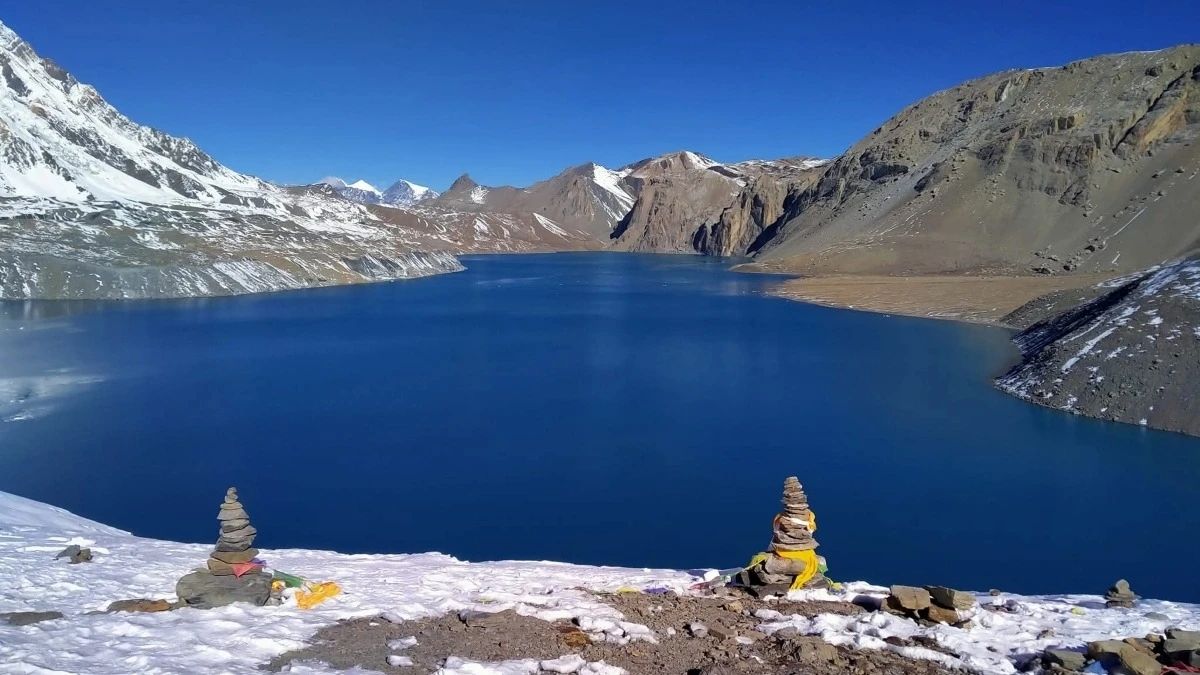
The defining experience of the entire journey is the early morning ascent to Tilicho Lake (4,919 m), one of the highest glacial lakes in the world. The approach begins in darkness, with headlamps cutting through cold, still air as the trail climbs from Tilicho Base Camp toward the frozen upper valley. The ascent includes the notorious series of twenty-two steep switchbacks, the most demanding section of the climb, where altitude and gradient combine to reduce every step to something slow and deliberate.
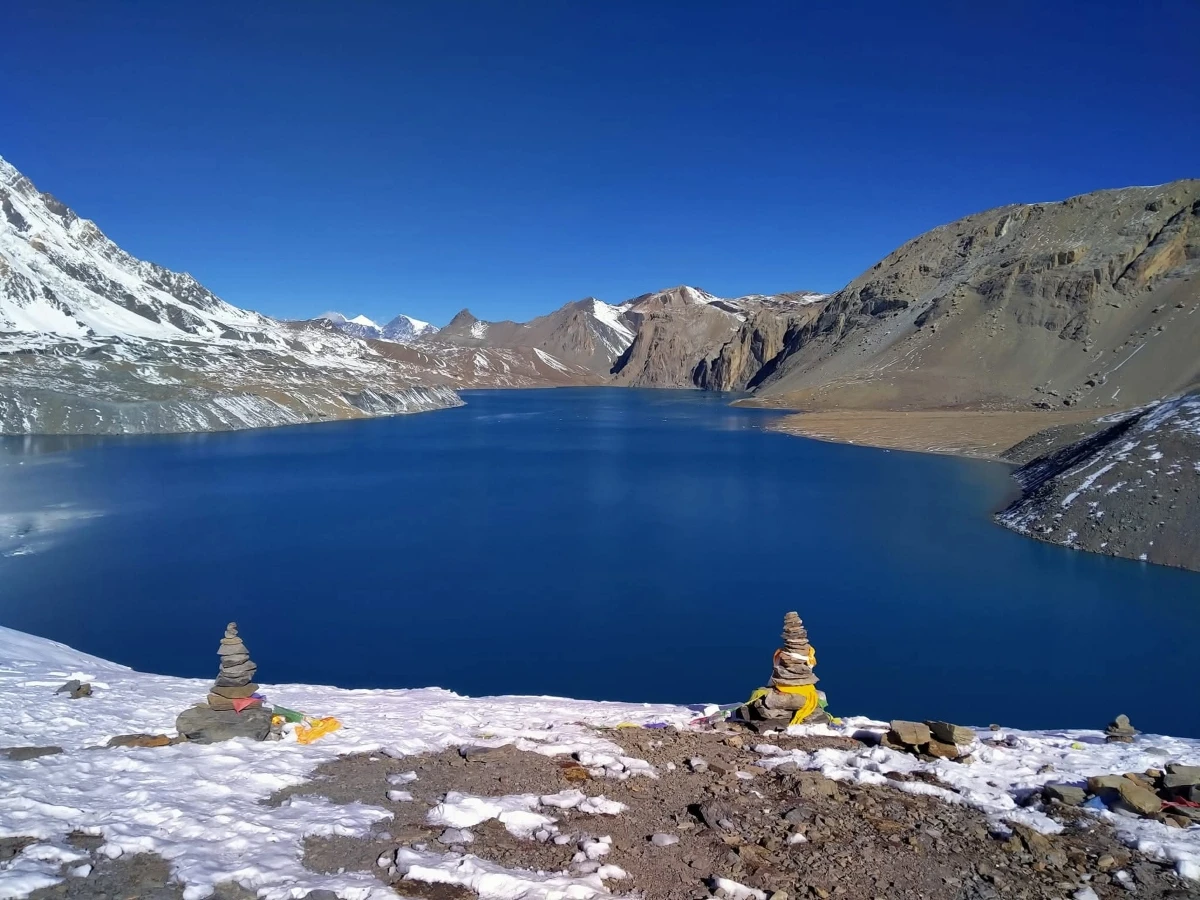
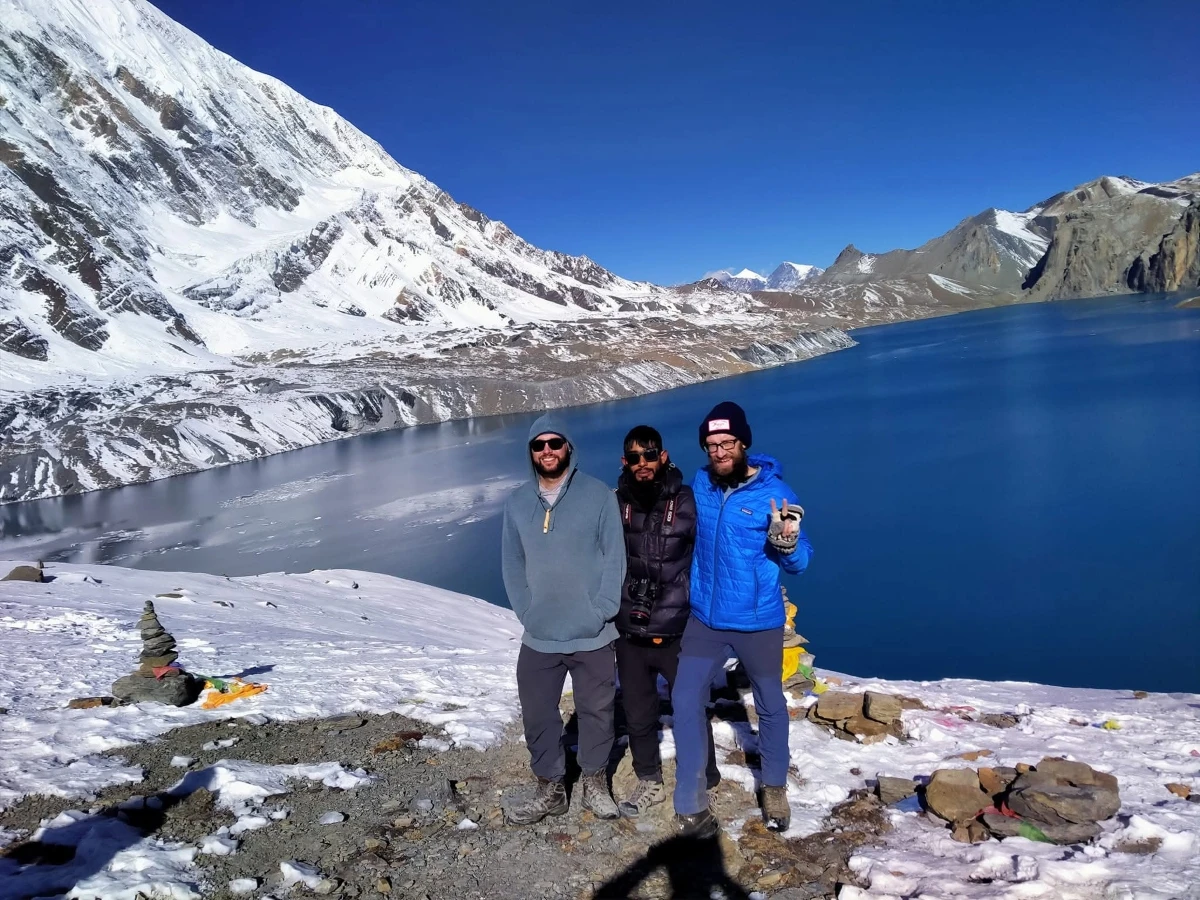
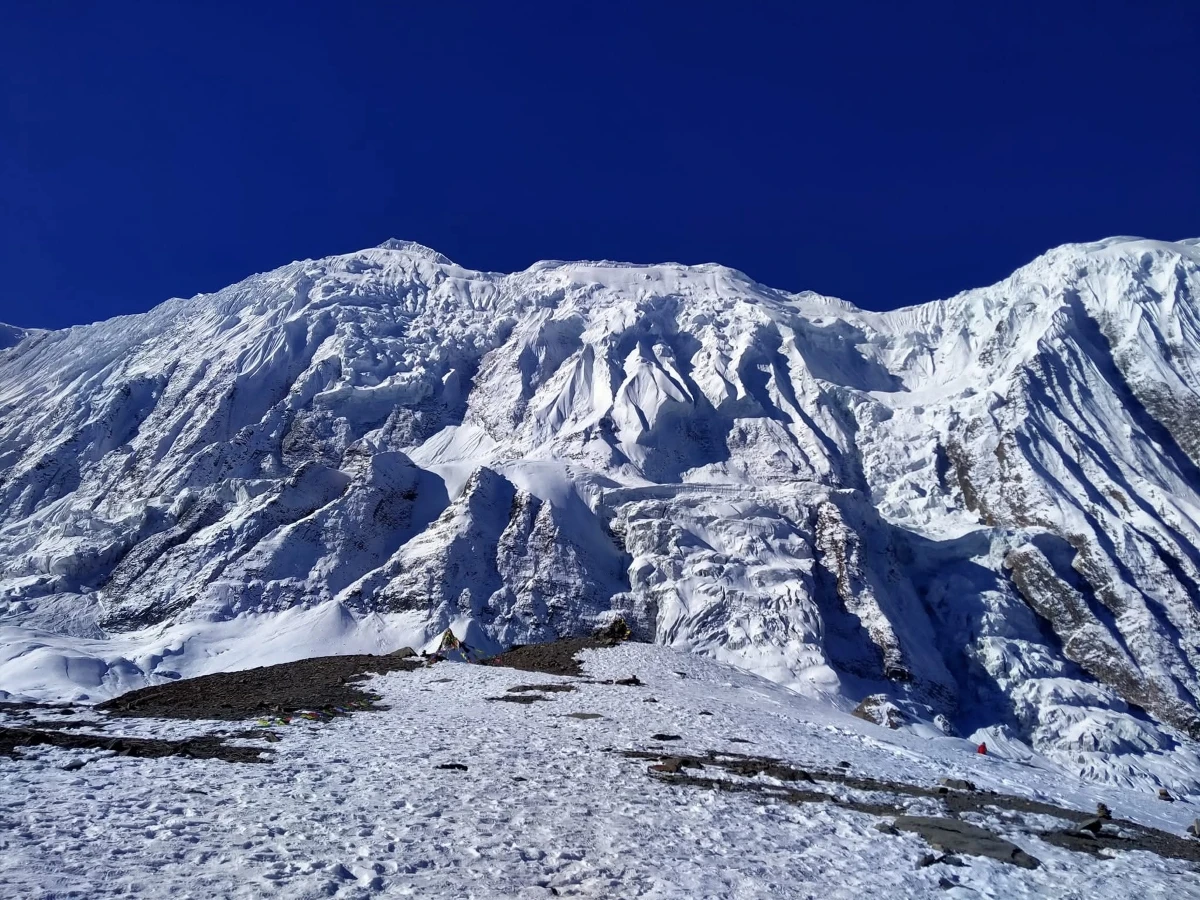
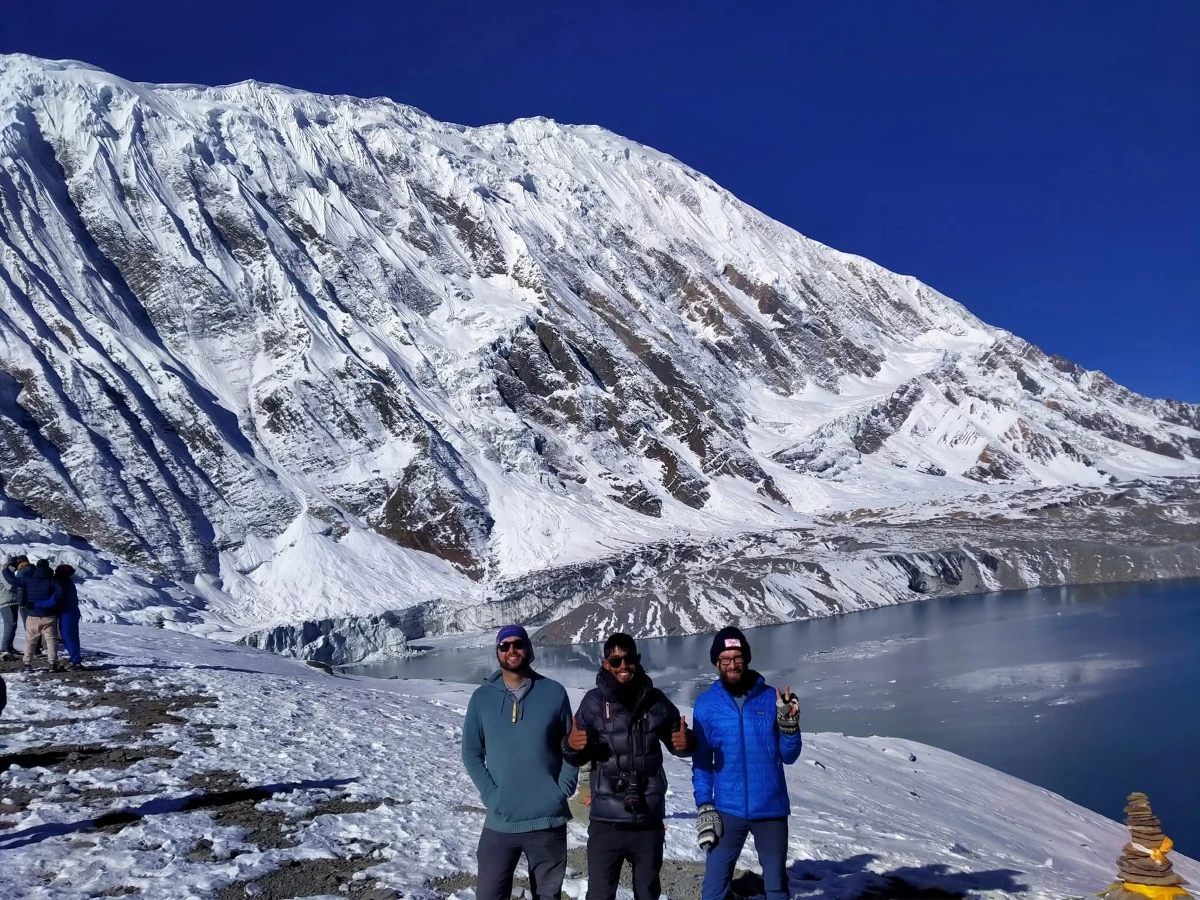
What waits at the top fully justifies the effort. Tilicho Lake sits in a vast natural amphitheater beneath Tilicho Peak and the Annapurna massif, its surface reflecting the surrounding snow-covered summits in a stillness that feels almost impossible at this altitude. In spring, the lake is frozen and snow-covered, surrounded by white silence. In autumn, the water turns a deep, extraordinary turquoise under clear high-altitude skies. In either season, the moment of arriving at the shoreline, breathless and cold, with the mountains rising on all sides, is one of the most powerful in all of Nepal's high-altitude trekking.
The route to the lake also passes through the Tilicho landslide section, a wide belt of loose scree and exposed cliff trail carved into the hillside above the valley. It is one of the most technically demanding sections of the trek and one of the most visually arresting, with the sand of the cliffs catching the morning wind in long golden plumes.
Culture, Landscape, and Experience
The Manang district belongs to the rain shadow of the Annapurna range, and its culture reflects centuries of life in a high, dry, windswept landscape that shares more with Tibet than with the subtropical valleys below. The people of Manang, known as Manangis, have historically been traders and long-distance travellers, and their villages carry an independence and self-sufficiency that is immediately perceptible. Stone chortens, prayer wheels, and ancient gompas mark every settlement, and the quality of the light in this arid high country, sharp, clear, and golden, creates a visual atmosphere unlike the greener lower hills.
The landscape shifts dramatically across the nine days. The lush rhododendron and pine forests of the lower Marsyangdi valley give way to the open, wind-exposed terrain of upper Manang, which gives way in turn to the raw glacial world of the Tilicho corridor. Ganesh Himal, Manaslu, Annapurna II, Annapurna III, Gangapurna, Pisang Peak, and Tilicho Peak are all visible at different stages of the route, and the cumulative effect of walking among peaks of this scale over nine days leaves a deep and lasting impression.
Completion and Return
After the lake and the long descent back to Shree Kharka, the return journey moves quickly. A short morning walk back to Khangsar is followed by a long jeep ride down the Marsyangdi valley through Chame and Besisahar, the road unwinding through gorges and waterfalls in roughly the reverse of the journey in. A stop at the Chyamche waterfall provides a final, unhurried moment of beauty before the road flattens and the lowland world returns.
The final drive from Besisahar back to Kathmandu closes the circuit. The transition from the silence and scale of the Tilicho corridor to the noise and density of Kathmandu is immediate and pronounced, and the contrast carries its own kind of satisfaction. Nine days is not long. But in those nine days, the Tilicho Lake Trek delivers something genuinely complete.
Conclusion
The Tilicho Lake Trek is a compact, high-intensity Himalayan experience that offers extraordinary altitude, dramatic landscapes, and authentic cultural immersion within a tight and well-structured nine-day itinerary. It is ideal for trekkers who want to reach a genuinely remote and spectacular high-altitude destination without the longer time commitment of the full Annapurna Circuit, and for those who want an experience that still feels raw and unhurried despite its shorter duration.
With proper acclimatization in Manang, experienced guidance, and a clear understanding of the demands of the Tilicho corridor, this trek offers a safe and deeply rewarding way to experience one of the Annapurna region's most hidden and extraordinary corners. The lake, once seen, is not easily forgotten.
Highlights
- Reach Tilicho Lake (4,919 m), one of the highest glacial lakes in the world, sitting in a natural amphitheater beneath Tilicho Peak and the Annapurna massif.
- Witness the sunrise over Gangapurna and surrounding peaks from the lake shore, where the turquoise water reflects snow-covered summits in extraordinary high-altitude clarity.
- Acclimatize in Manang, one of the Annapurna region's most characterful high-altitude towns, with a hike to Gangapurna Lake (3,600 m) and sweeping views of the Annapurna glaciers directly above the valley.
- Cross the notorious Tilicho landslide section, a dramatic and technically demanding stretch of cliff-carved trail above the valley floor, where morning winds carry golden sand plumes from the exposed rock faces.
- Drive deep into the Marsyangdi gorge on one of the most adventurous and visually stunning approach roads in the Annapurna region, with hanging cliffs, river crossings, and cascading waterfalls accompanying the journey in.
- Visit the Manang Valley apple orchard at Brathang, the largest apple orchard in South Asia, for one of the most unexpected and memorable interludes on any trek in Nepal.
- Enjoy panoramic mountain views throughout the route including Annapurna II, Annapurna III, Gangapurna, Tilicho Peak, Pisang Peak, Manaslu, Lamjung Himal, and the full scale of the Annapurna massif.
- Walk through the high ridge villages of Ghyaru and Ngawal, perched above the valley floor with open unobstructed panoramas that stretch across the entire upper Marsyangdi landscape.
- Trek through the culturally rich Manangi villages of Chame, Pisang, and Manang, where Tibetan-influenced architecture, ancient gompas, prayer wheels, and centuries-old stone chortens line the trail.
- Experience the full dramatic range of the Annapurna Conservation Area landscape, from lush subtropical forest and terraced farmland in the lower valley to arid, windswept alpine terrain above 4,000 meters.
- Climb the famous twenty-two switchbacks above Tilicho Base Camp, the steepest and most demanding section of the ascent, where altitude and gradient combine to make every step earned.
- A well-structured nine-day itinerary with a dedicated acclimatization day in Manang, ensuring a safe and comfortable experience at one of the highest trekking destinations in Nepal.