Manaslu Circuit Trek: Around the Mountain of the Spirit

The Manaslu Circuit Trek is one of Nepal's most compelling high-altitude journeys, encircling Mount Manaslu (8,163 m) - the world's eighth-highest peak and, in Sanskrit, the "Mountain of the Spirit." This 13-day trek offers a rare combination of remote Himalayan wilderness, deep gorges, glacial terrain, Tibetan-influenced culture, alpine meadows, and the thrilling crossing of Larkya La Pass at 5,106 meters. Unlike the more crowded circuits of the Everest and Annapurna regions, the Manaslu Circuit remains far less trafficked and far more raw - a trek that still feels, in the best possible way, like a genuine expedition.

This is a journey through a landscape that changes daily and dramatically. From the humid subtropical valleys of the lower Budhi Gandaki, with their rice terraces and river-level paths, to the wind-scoured moraines and snowfields of the high pass, every day delivers something entirely new. The trail is physically demanding and deeply rewarding - a complete Himalayan experience for trekkers who are ready to move beyond the well-worn paths and into something wilder.

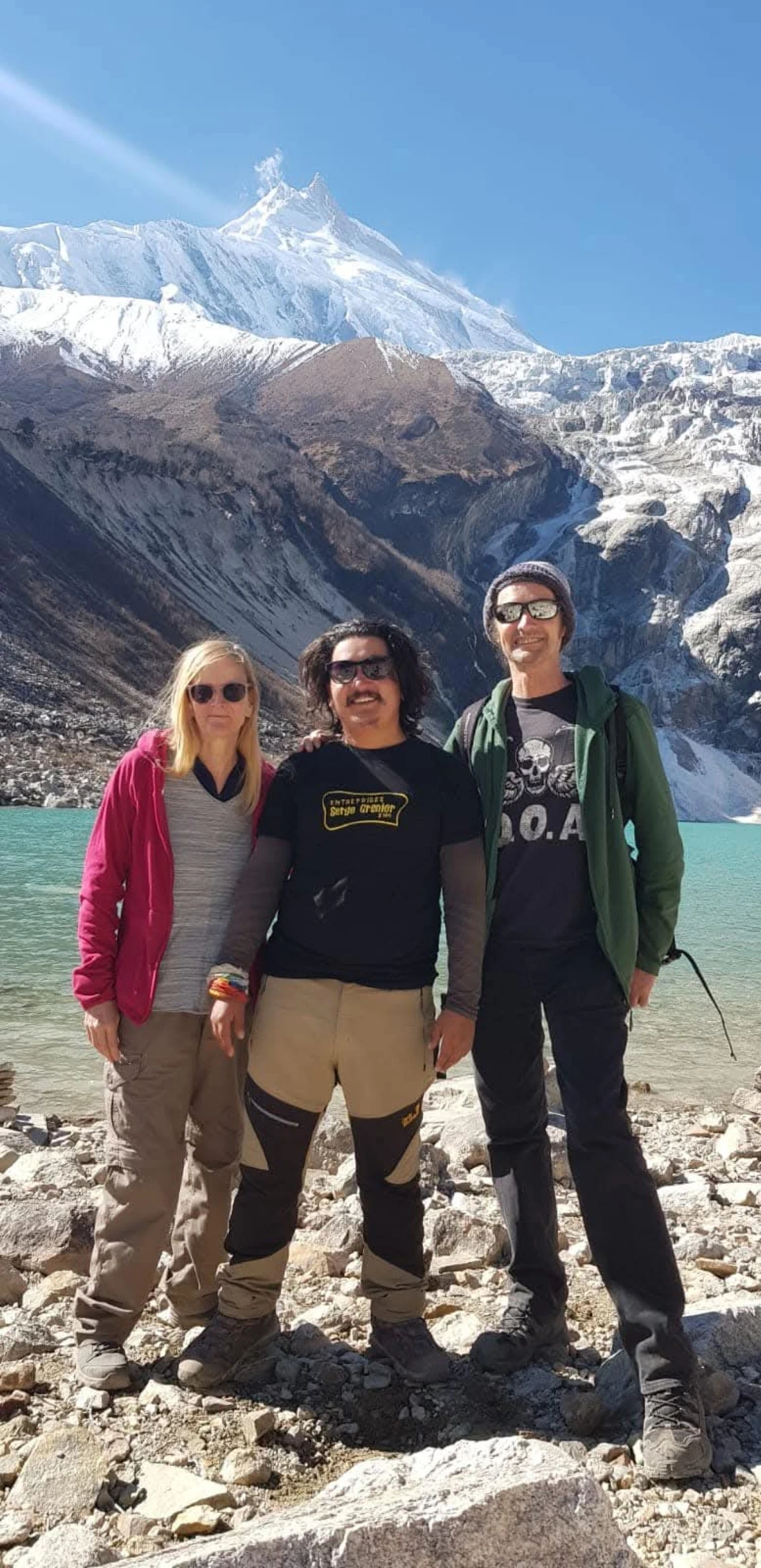
This trek is not just about summiting a pass. It is about the journey itself - walking through stone-paved villages where Tibetan Buddhist culture remains alive and uninterrupted, crossing suspension bridges over turquoise glacial rivers, visiting ancient gompas, and standing before the immense south face of Manaslu at close range. Very few treks in the world offer this combination of altitude, culture, and genuine remoteness in a single circuit.

The Journey Through the Budhi Gandaki Valley

The trek begins at the roadhead near Machha Khola and follows the Budhi Gandaki River upstream through one of Nepal's most dramatic river gorges. The lower sections of the trail wind through subtropical forests, narrow canyon walls, and small settlements where the sounds of waterfalls and rushing water are constant companions. Suspension bridges - some of impressive length and height - carry the trail across the river again and again as the valley deepens.

As the route climbs northward, the cultural landscape shifts noticeably. The influence of Tibetan Buddhism grows stronger with every village, visible in the carved mani walls lining the trail, the chortens standing at ridge crossings, the prayer flags strung between peaks, and the gompa bells that drift across the open valleys. Villages such as Jagat, Deng, Namrung, and Lho mark this gradual transition from the Hindu traditions of the lower hills to the high-altitude Tibetan culture of the upper Manaslu region.

The trail eventually opens into the wider pastoral valleys around Sama Gaon - one of the largest and most important settlements of the circuit - where the full scale of Manaslu's south face first appears. This is the emotional heart of the trek, where the mountain that has accompanied you for days finally reveals itself completely.

Crossing Larkya La Pass

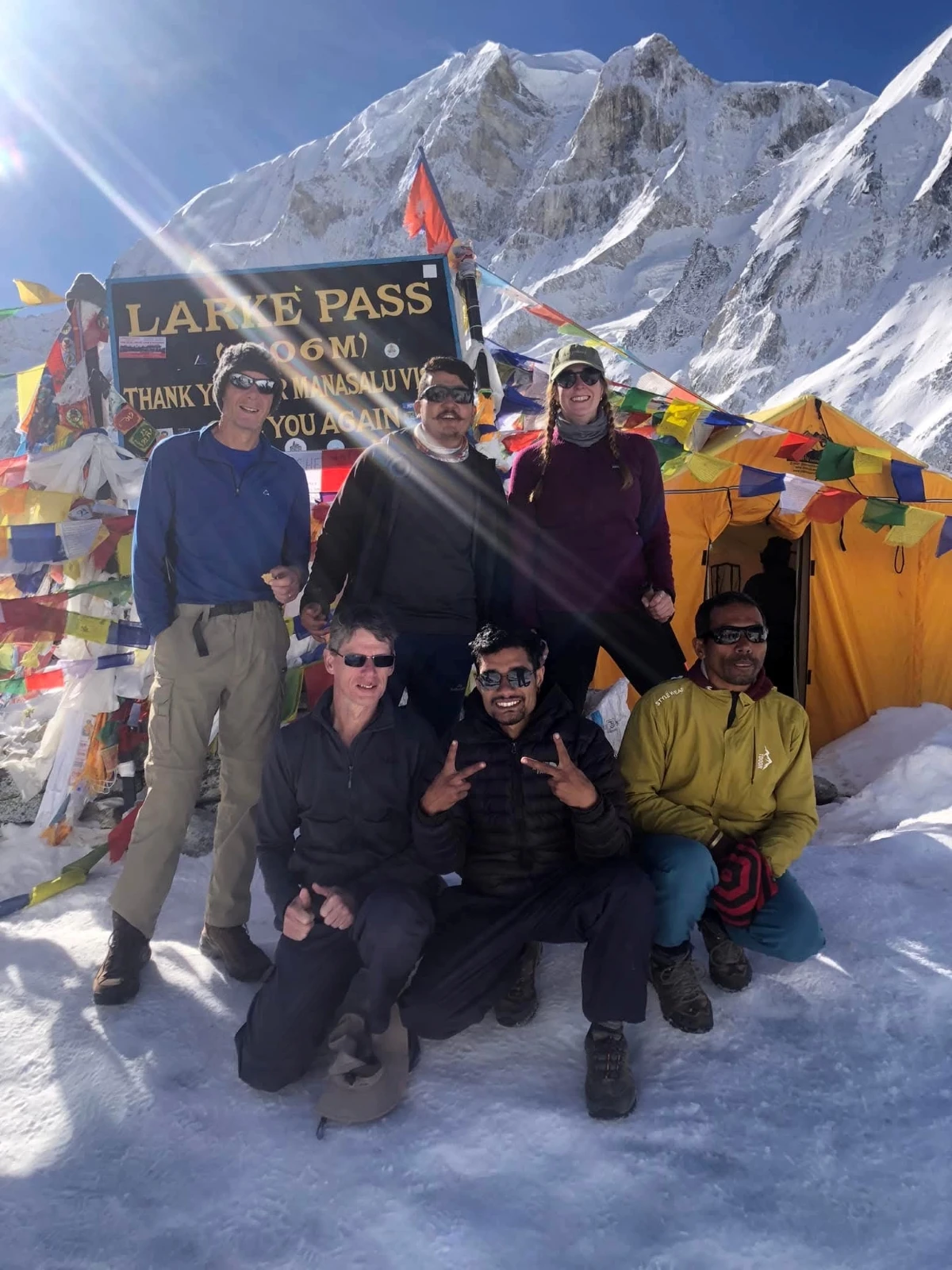
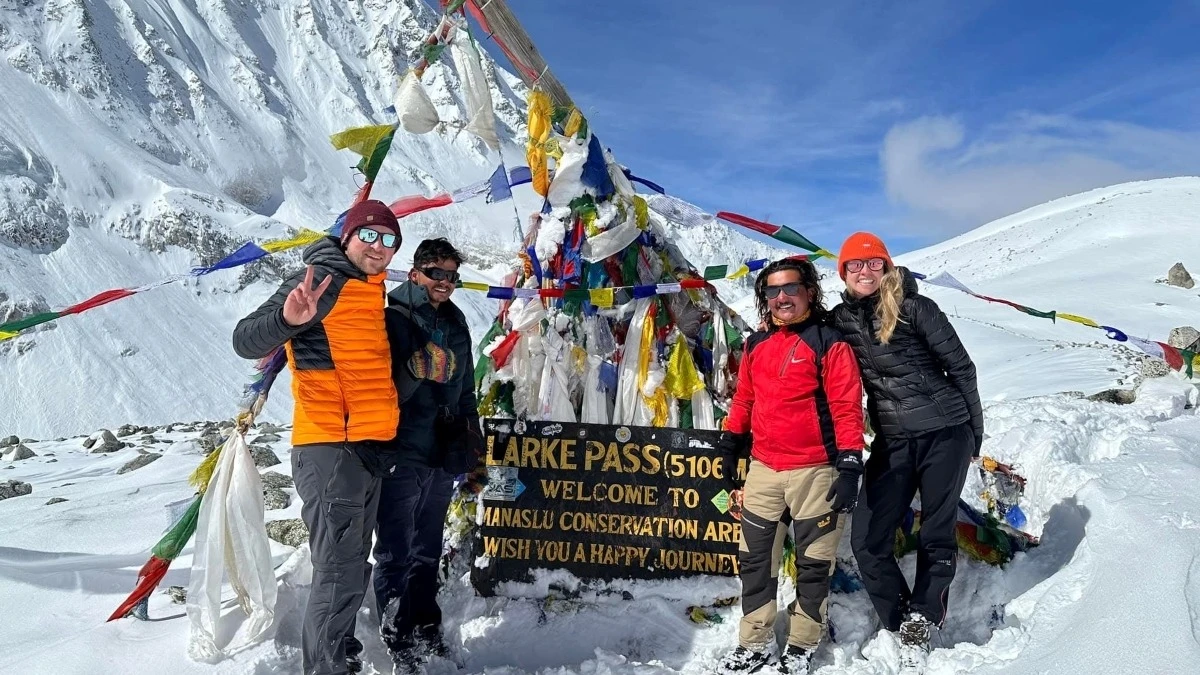
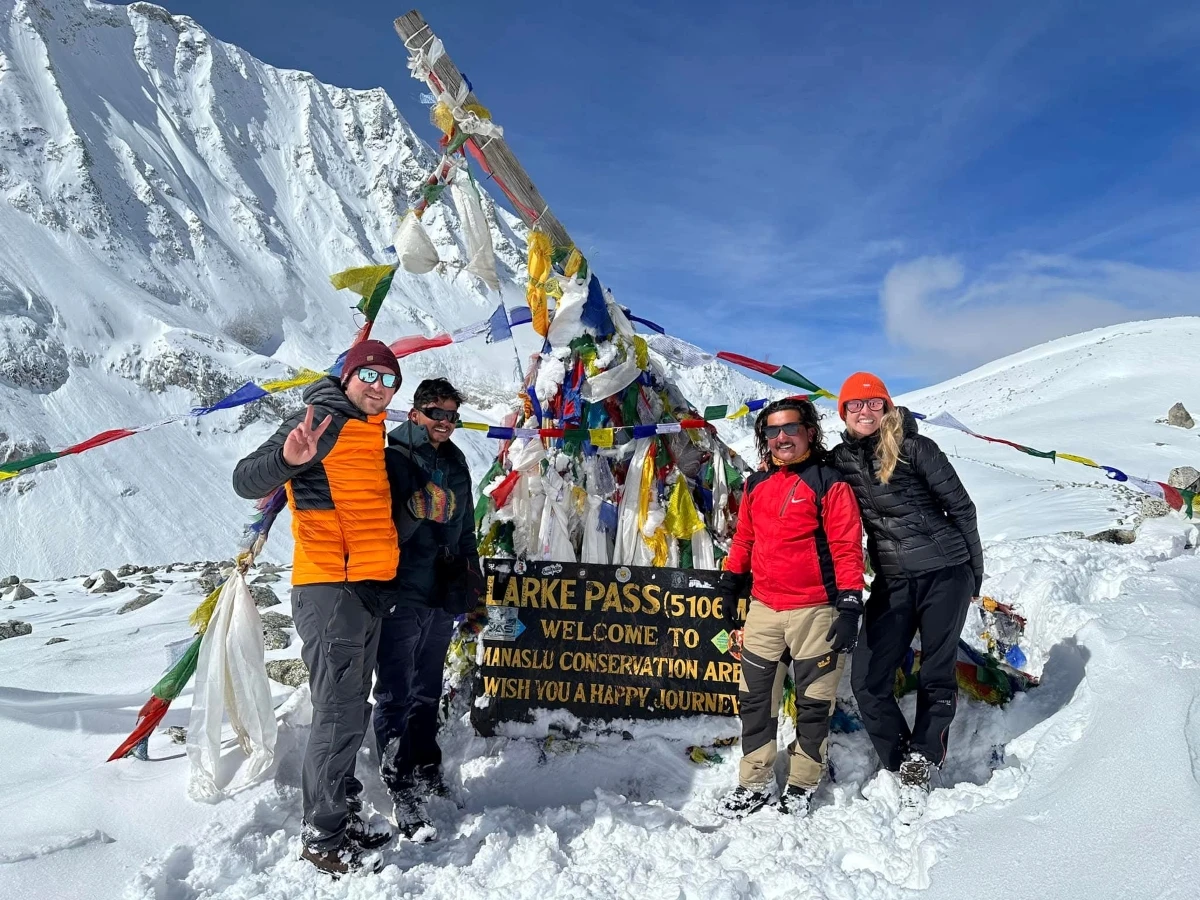
The defining moment of the entire circuit is the crossing of Larkya La Pass (5,106 meters), the highest point of the trek and one of the most exhilarating high-altitude crossings in Nepal. The ascent begins before dawn, trekking slowly by headlamp through cold and silence toward the pass. The climb is relentless but steady, and altitude makes every step deliberate. Reaching the top is a major physical and personal achievement.

The reward is extraordinary. From the pass, sweeping panoramic views open across Himlung Himal, Cheo Himal, Kang Guru, and Annapurna II - a vast, unobstructed Himalayan horizon rarely seen at this scale. After spending time at the top, the descent toward Bimtang follows rocky and glacial terrain, dropping through a dramatic corridor that reveals ever-wider views to the west. It is, by many accounts, the most visually memorable section of any trek in Nepal.

The long descent to Bimtang brings welcome warmth, lower altitude, and a profound sense of completion. The hardest day of the trek is behind you.

Culture, Landscape, and Experience

Throughout the Manaslu Circuit, you travel through a living cultural corridor that has changed little over centuries. From the Hindu traditions of the lower Gandaki villages to the Tibetan Buddhist communities of the upper circuit, the trek offers a genuinely layered cultural experience. Monasteries, mani walls, prayer wheels, and chortens are woven into the landscape at every turn, and the people of these remote communities - farmers, herders, and monks - welcome trekkers with understated warmth.

The landscape shifts constantly and dramatically across the 13 days. Dense subtropical forest gives way to pine and rhododendron, which give way to open alpine terrain, glacial moraines, and finally the stark, windswept world above 5,000 meters. On the descent, the transition reverses - the return of vegetation, warmth, and colour feels like a quiet celebration of the journey completed.

Wildlife in the Manaslu Conservation Area is a genuine presence on the trail. Snow leopards, Himalayan tahr, red pandas, and langur monkeys inhabit these forests and ridges, and the birding throughout the lower sections is exceptional.

Completion and Return

After crossing Larkya La Pass and descending through Bimtang and Tilje, the trek concludes at Dharapani, where the Manaslu trail meets the edge of the Annapurna region. From here, a jeep or bus carries you along the Marsyangdi valley back toward Kathmandu - a long drive, but a scenic one, with rivers and terraced hillsides offering a final, unhurried farewell to the mountains.

Arriving back in Kathmandu, the contrast with the remoteness of the Manaslu Circuit is striking. The city feels entirely different after 13 days in the wilderness. A final evening in Kathmandu brings the journey to a satisfying close, and the memories of the Budhi Gandaki, the south face of Manaslu, and the crossing of Larkya La remain vivid long afterward.

Conclusion

The Manaslu Circuit Trek is a complete and deeply immersive Himalayan experience - physically demanding, culturally rich, and visually extraordinary from start to finish. It is well suited to trekkers with prior high-altitude experience who are looking for something more remote, more challenging, and more authentic than the well-known classic circuits. The combination of a restricted-area permit system, genuine wilderness, and a high-altitude pass crossing gives this trek a character all its own.

With proper acclimatization, experienced guidance, and well-organized logistics, this 13-day circuit offers a safe and profoundly rewarding way to experience one of Nepal's most spectacular mountain regions. The Manaslu Circuit is not simply a trek - it is one of the great Himalayan journeys, and it earns that title completely.


Highlights

  • Circle Mount Manaslu (8,163 m), the world's eighth-highest peak and the "Mountain of the Spirit," through one of Nepal's most remote and spectacular trekking circuits.
  • Cross Larkya La Pass (5,106 m) - the high point of the trek - with panoramic views of Himlung Himal, Cheo Himal, Kang Guru, and Annapurna II stretching across the horizon.
  • Trek through the dramatic gorges of the Budhi Gandaki River, one of the most visually striking river valleys in the Himalaya, with towering canyon walls, waterfalls, and turquoise glacial water.
  • Experience the living Tibetan Buddhist culture of the upper Manaslu region through ancient monasteries, mani walls, chortens, and traditional stone villages including Lho, Sama Gaon, and Samdo.
  • Visit Birendra Lake, a stunning glacial lake near Sama Gaon, and hike toward Manaslu Base Camp (4,750 m) for close views of Manaslu's immense south face on the acclimatization day.
  • Trek through diverse landscapes ranging from subtropical forests and terraced river valleys to pine and rhododendron forests, open alpine meadows, glacial moraines, and high snowfields.
  • Cross remarkable suspension bridges over the Budhi Gandaki River - some of the longest and most dramatic suspension bridges on any trek in Nepal.
  • Walk through the Manaslu Conservation Area, a protected wilderness rich in wildlife including snow leopards, Himalayan tahr, red pandas, and rare Himalayan bird species.
  • Experience a restricted-access trekking region that remains significantly less crowded than the Everest and Annapurna circuits, preserving a sense of genuine adventure and wilderness.
  • Witness the dramatic cultural transition from Hindu traditions of the lower Gandaki villages to the Tibetan Buddhist communities of the high circuit - a journey through two distinct worlds in one trail.
  • Pass by peaks including Himal Chuli (7,893 m), Ngadi Chuli (7,871 m), Shringi Himal (7,187 m), and Manaslu North on a circuit that keeps major summits in view throughout.
  • Stay in traditional teahouses operated by local families, experiencing authentic mountain hospitality in one of Nepal's most remote inhabited regions.
Itinerary

Nepal's Manaslu region offers one of the most rewarding and authentic trekking experiences in the entire Himalaya. This 13-day circuit takes you around Mount Manaslu - the "Mountain of the Spirit" - through a landscape that shifts from subtropical river gorges to high-altitude snowfields, and through a cultural corridor that moves from the Hindu traditions of the lower Gandaki villages to the deeply Tibetan Buddhist communities of the upper circuit. Every day on the trail delivers something new, and the cumulative effect of the journey is unlike anything the more popular trekking routes can offer.

The heart of the trek is the Budhi Gandaki Valley, one of Nepal's most dramatic river gorges, where the trail follows the river upstream through narrow canyon sections, across high suspension bridges, and beneath the cascading waterfalls of a landscape still largely untouched by mass tourism. As altitude increases, the valley widens and the mountains grow closer, until the full south face of Manaslu fills the skyline above Sama Gaon - one of the most powerful moments of the entire circuit.

This 13-day itinerary is designed with careful acclimatization and a pace that allows you to absorb both the physical and cultural richness of the region. The crossing of Larkya La Pass on Day 10 is the physical and emotional centrepiece of the journey - demanding, spectacular, and deeply satisfying. With experienced guidance and proper preparation, the Manaslu Circuit is not just a trek. It is a genuine Himalayan adventure.

You arrive in Kathmandu, where our team welcomes you at the airport and transfers you to your hotel. The rest of the day is free to rest and recover from travel, or to explore the vibrant streets of Thamel.

In the evening, your trek guide meets you for a comprehensive briefing covering the route, permits, altitude considerations, safety protocols, and the cultural character of the Manaslu region. This is also the time to ensure all personal gear is in order before the early start the following morning.

  • Meals: Dinner
  • Accommodation: Hotel in Kathmandu

Your journey begins early with a long but scenic drive out of Kathmandu, following the Prithvi Highway alongside rivers and terraced hillsides before turning north toward the Budhi Gandaki Valley. Leaving the Kathmandu Valley behind, the road passes through Dhading Besi and continues toward Arughat, where the sealed road gives way to rougher, narrower tracks.

As the road climbs into the hills, the landscape becomes increasingly rugged and the first sense of remoteness settles in. The Manaslu massif begins to hint at itself through gaps in the ridgeline. After approximately seven to eight hours of driving, you arrive at Machha Khola - a small riverside settlement - where you check into a local teahouse, enjoy dinner, and rest in preparation for the trek ahead.

  • Max Altitude: 890 m
  • Meals: Breakfast, Lunch, Dinner
  • Accommodation: Teahouse in Machha Khola
  • Duration: Drive: 7–8 hrs

The first full trekking day follows the Budhi Gandaki River upstream through a landscape that is still lush and subtropical. The trail winds through forested sections, passes small settlements clinging to the hillsides, and crosses the Machha River before reaching Khorlabesi. A short detour leads to Tatopani, known for its natural hot springs - a gentle reward for the opening miles.

Beyond Tatopani, the path enters the Budhi Gandaki Valley proper, where the gorge begins to narrow and the walls close in on either side. The river runs a deep turquoise below, and waterfalls cascade from the cliff faces above. Several suspension bridges carry the trail back and forth across the river. After approximately six to seven hours of walking, you arrive at Jagat - a traditional stone-paved village that marks the official checkpoint for the Manaslu Restricted Area. Permits are checked here.

  • Max Altitude: 1,410 m
  • Meals: Breakfast, Lunch, Dinner
  • Accommodation: Teahouse in Jagat
  • Duration: Trek: 6–7 hrs
  • Distance: 22 km

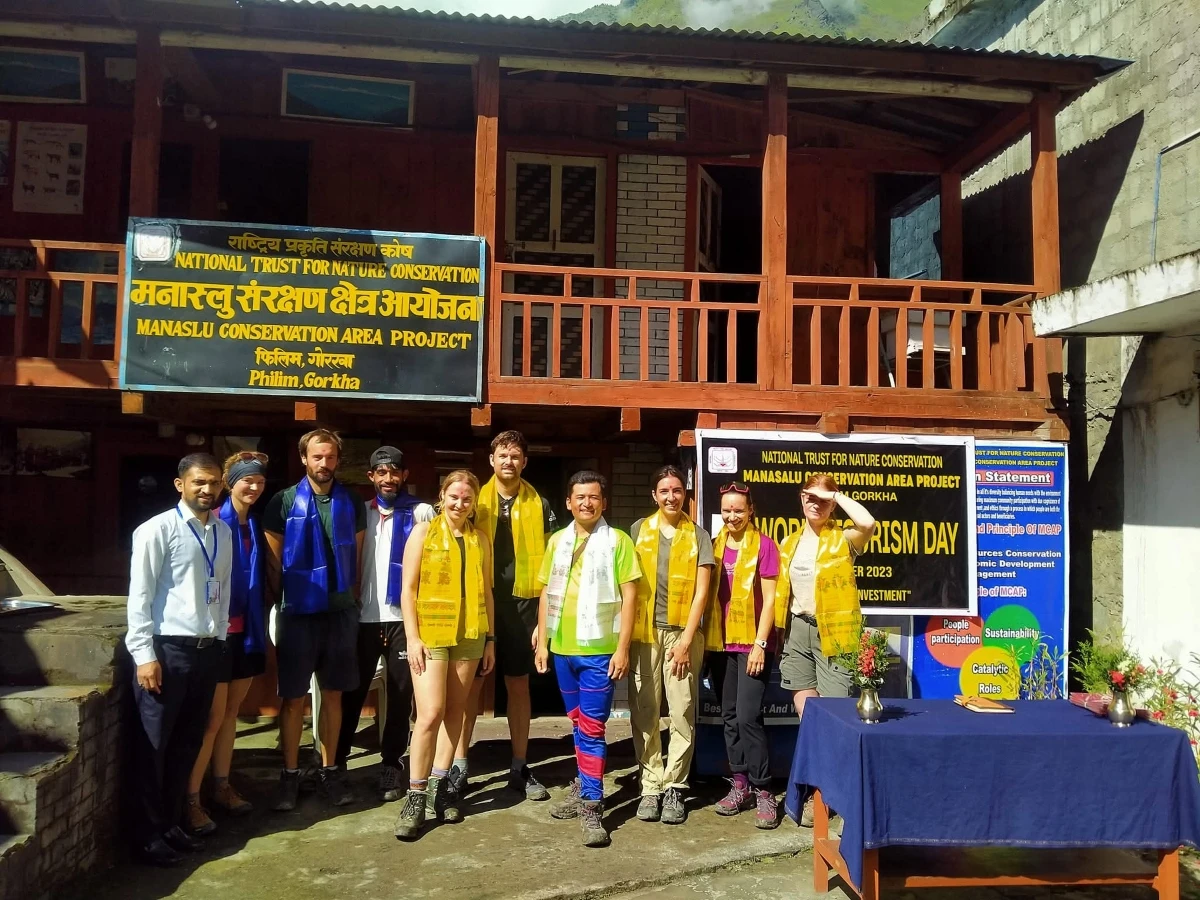
From Jagat, the trail continues along the Budhi Gandaki through increasingly narrow gorge sections, where the canyon walls press close and the sound of water fills the valley. You walk through small settlements including Sirdibas and Philim, where waterfalls cascade from the mountains on both sides of the valley and the first signs of Tibetan architectural influence begin to appear in stone construction and carved doorways.

The path ascends gradually through dense forest before crossing a suspension bridge and climbing to Ekle Bhatti and Pewa village. As the valley deepens, the air cools noticeably and the vegetation begins its transition toward more alpine species. After around six to seven hours of trekking, you reach Deng - a quiet village surrounded by forested slopes - where the night is spent adjusting to the rising altitude.

  • Max Altitude: 1,804 m
  • Meals: Breakfast, Lunch, Dinner
  • Accommodation: Teahouse in Deng
  • Duration: Trek: 6–7 hrs
  • Distance: 19 km

Today the cultural character of the trail shifts clearly and visibly. As you follow the Budhi Gandaki upstream through pine and rhododendron forests, the first mani walls begin to appear along the path - flat stones carved with Tibetan mantras, placed by local Buddhists as acts of devotion. Chortens and prayer wheels follow, marking a landscape that is now firmly within the territory of Tibetan Buddhism.

The trail climbs steadily, crossing wooden bridges and passing through small hamlets where traditional stone houses sit beside barley fields and yak pastures. Snow-capped peaks begin to appear between the trees as altitude increases, and the scale of the surrounding mountains becomes increasingly apparent. After approximately five to six hours, you arrive in Namrung - a hillside village with impressive mountain views and a noticeably cooler, thinner air.

  • Max Altitude: 2,630 m
  • Meals: Breakfast, Lunch, Dinner
  • Accommodation: Teahouse in Namrung
  • Duration: Trek: 5–6 hrs
  • Distance: 16 km

This is one of the most culturally rich days of the entire circuit. Leaving Namrung, the trail opens into wider valleys with the kind of expansive mountain views that define the upper Manaslu region. You pass through Lihi and Sho villages, where stone houses, prayer flags, and long mani walls create a landscape of quiet spiritual depth, before reaching Lho - a beautiful village where walking between the ancient mani walls feels like stepping several centuries back in time.

From Lho, the full south face of Manaslu (8,163 m) and the summit of Ngadi Chuli (7,871 m) dominate the skyline in a way that is both overwhelming and deeply moving. A short detour from Lho leads toward the Pungen Glacier for a closer view of Manaslu - an optional extension that few trekkers regret. Ribung Monastery, one of the most important spiritual sites on the circuit, is also worth a visit near the trail. After five to six hours of trekking, you arrive at Sama Gaon - one of the largest and most significant villages of the entire circuit - where the landscape opens into wide yak pastures and glacial streams.

  • Max Altitude: 3,530 m
  • Meals: Breakfast, Lunch, Dinner
  • Accommodation: Teahouse in Sama Gaon
  • Duration: Trek: 5–6 hrs
  • Distance: 14 km

This is an essential rest and acclimatization day before moving into the highest sections of the circuit. Rather than remaining idle, the day is spent in active acclimatization - following the well-established principle of climbing high and sleeping low to help your body adapt effectively.

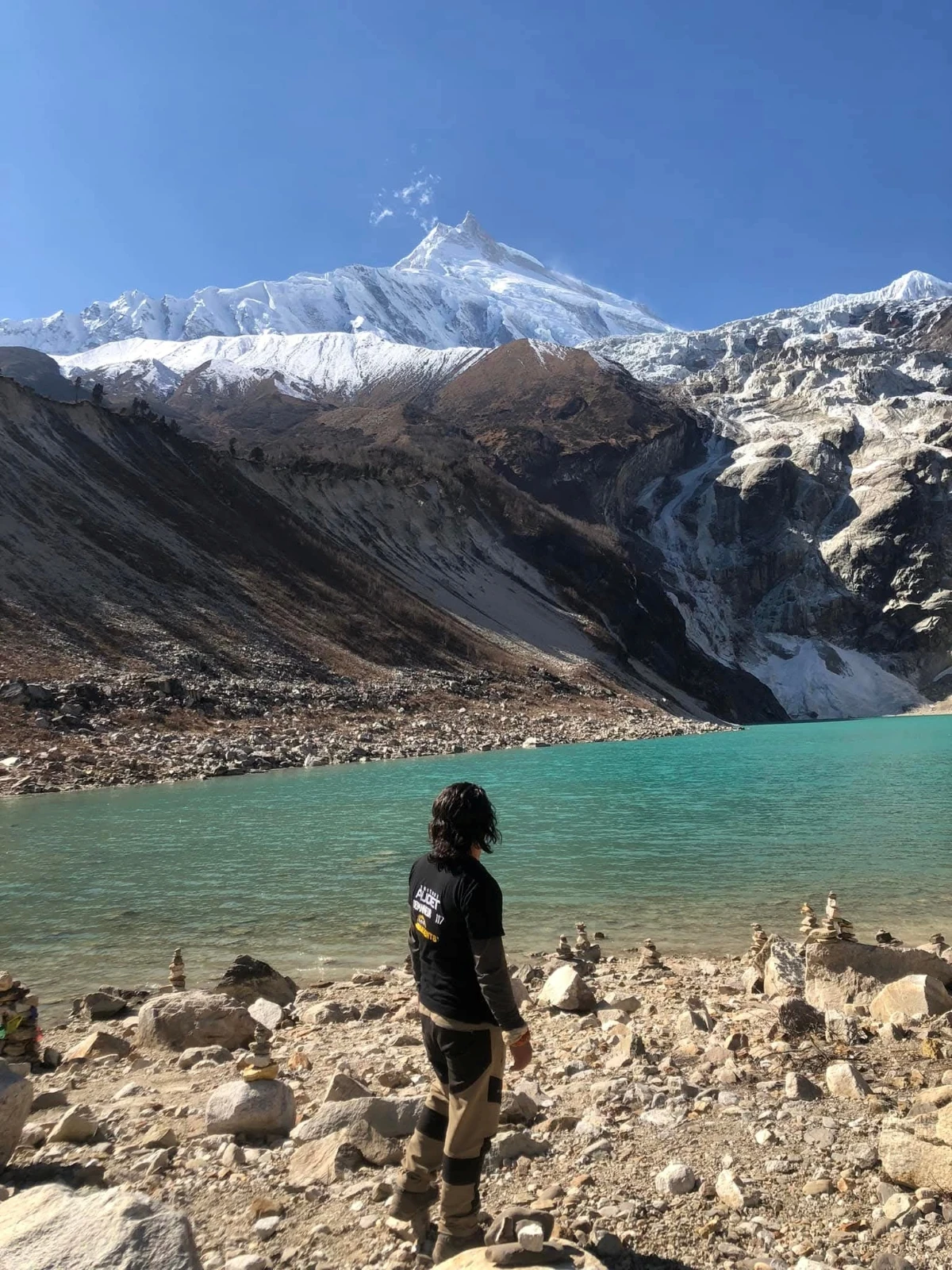
Two main options are available. The full-day hike leads toward Manaslu Base Camp (4,750 m), a six to seven hour return journey that offers extraordinary close-range views of Manaslu's south face and the glaciers that flow from it. The shorter option follows the trail to Birendra Lake, a beautiful glacial lake that reflects the surrounding peaks on calm mornings. Both options reward the effort significantly. The afternoon is free to explore Sama Gaon's monastery, interact with the local community, and rest before the higher-altitude days ahead.

  • Meals: Breakfast, Lunch, Dinner
  • Accommodation: Teahouse in Sama Gaon

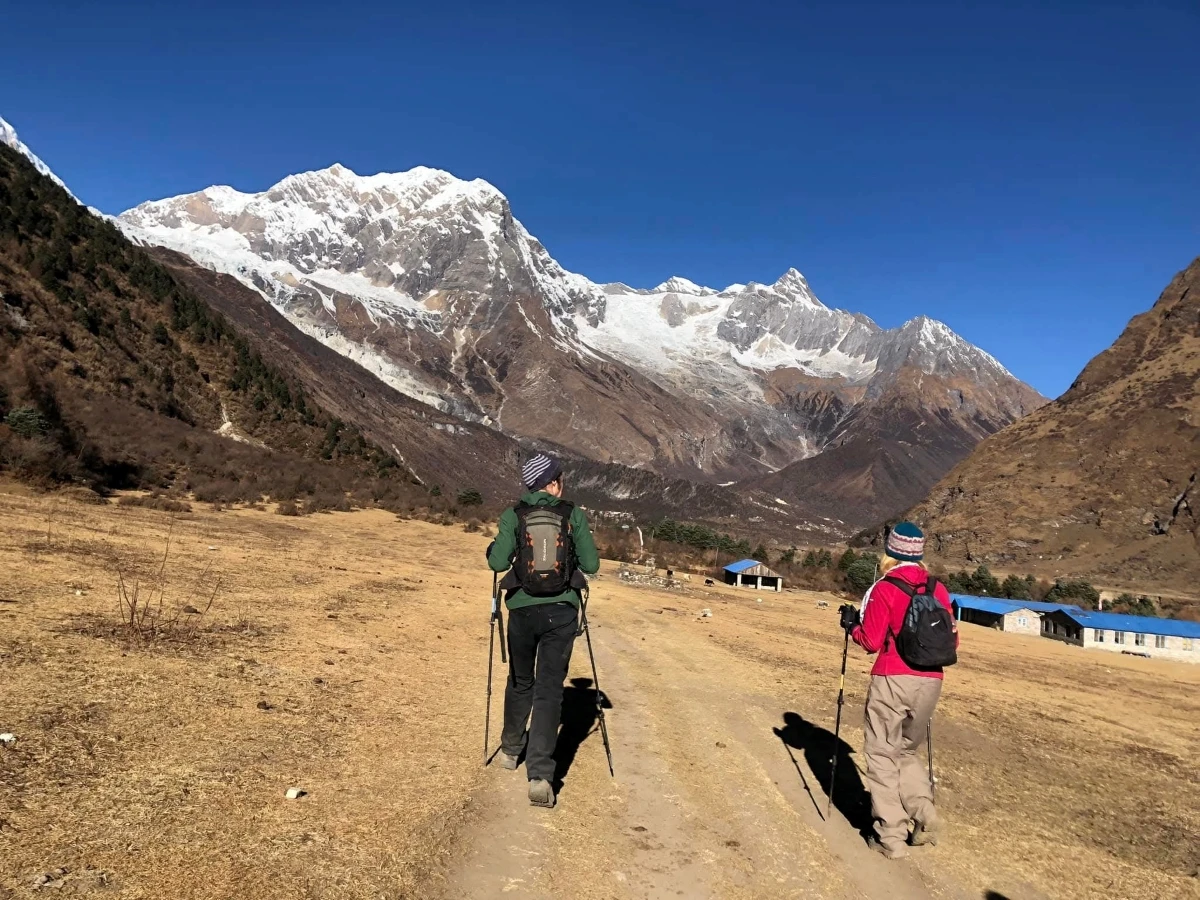
Today's walk is shorter but important, allowing further altitude adaptation before the crossing of Larkya La Pass. The trail climbs gradually through increasingly barren, windswept terrain as trees give way entirely to rocky ground and alpine grasslands. The views grow more dramatic with every hundred meters of elevation gain - glaciers, moraines, and towering peaks dominate a landscape that now feels genuinely remote and high.

Samdo is a small, tight-knit village close to the Tibetan border, with a distinct high-altitude Himalayan character. Yaks graze on the surrounding slopes, and the few teahouses here offer a warm welcome after the exposed trail. After approximately three to four hours of trekking, you arrive and spend the afternoon resting, rehydrating, and preparing for the demanding day ahead. The proximity to Tibet gives Samdo a particular cultural atmosphere - quiet, self-contained, and deeply tied to the high mountains.

  • Max Altitude: 3,860 m
  • Meals: Breakfast, Lunch, Dinner
  • Accommodation: Teahouse in Samdo
  • Duration: Trek: 3–4 hrs
  • Distance: 10 km

Today's stage is shorter in distance but crucial in purpose - moving to the staging camp at Dharmasala, known locally as Larkya Phedi, in preparation for tomorrow's pass crossing. The trail climbs gradually through rugged, open alpine terrain where the environment feels genuinely harsh and remote. There are no trees, few landmarks, and the wind picks up as you gain elevation. The silence and scale of this landscape are remarkable.

Dharmasala is a basic settlement - simple teahouses used primarily as a staging point for the pass crossing - but it serves its purpose well. You arrive after four to five hours of trekking, eat an early dinner, check and re-check your gear, and rest as early as possible. Tomorrow begins before dawn, and the body needs every hour of recovery it can find at this altitude.

  • Max Altitude: 4,460 m
  • Meals: Breakfast, Lunch, Dinner
  • Accommodation: Teahouse at Dharmasala
  • Duration: Trek: 4–5 hrs
  • Distance: 10 km

This is the most demanding and most spectacular day of the entire circuit. The start comes before dawn - headlamps on, the cold sharp and still - as you begin the long ascent toward Larkya La Pass in darkness and quiet. The climb is relentless. At this altitude, every step requires deliberate effort and steady breathing. The pace slows naturally, and patience becomes as important as fitness.

As the sky lightens and the pass draws closer, the world opens up. Reaching Larkya La (5,106 m) is a genuine achievement - the highest point of the circuit, and one of the highest trekking passes in Nepal regularly crossed without technical equipment. The panoramic views from the top encompass Himlung Himal, Cheo Himal, Kang Guru, and Annapurna II across a vast Himalayan horizon. The wind is cold and persistent, but the views hold you.

The descent from the pass follows rocky and glacial terrain through a dramatic western corridor, with the scenery expanding further with every step down. After approximately eight to nine hours of total trekking, you reach Bimtang - a high alpine meadow encircled by peaks - where warmer air and lower altitude bring an overwhelming sense of physical relief. The hardest day of the trek is behind you.

  • Max Altitude: 5,106 m
  • Meals: Breakfast, Lunch, Dinner
  • Accommodation: Teahouse in Bimtang
  • Duration: Trek: 8–9 hrs
  • Distance: 18 km

After the intensity of Day 10, today offers a welcome change of pace and scenery. The trail descends steadily through alpine meadows and rhododendron forests, following clear mountain streams that gather volume as you lose altitude. The return of vegetation - first low shrubs and grasses, then the unmistakable red and pink of rhododendron in season - feels like a quiet celebration of the descent.

You cross suspension bridges and pass small settlements, the air growing warmer and richer with oxygen at every turn. The mountains remain visible behind you, framing the trail with a reminder of where you have been. After approximately five to six hours of walking, you arrive in Tilje - a pleasant, green village where you can rest comfortably, share stories of the pass crossing with fellow trekkers, and reflect on the full arc of the journey now behind you.

  • Max Altitude: 1,700 m
  • Meals: Breakfast, Lunch, Dinner
  • Accommodation: Teahouse in Tilje
  • Duration: Trek: 5–6 hrs
  • Distance: 17 km

The final trekking day is gentle and brief - a walk downhill through forests and small villages to reach Dharapani, where the Manaslu Circuit trail meets the road and connects with the edge of the Annapurna region. The sense of the mountains beginning to recede is real and bittersweet. Dharapani marks the end of the trail.

From Dharapani, you board a jeep or bus and begin the long drive back toward Kathmandu via Besisahar. The road follows the Marsyangdi River valley through terraced hills and market towns, offering a final, unhurried look at rural Nepal. The drive takes most of the afternoon and evening, and you arrive in Kathmandu late, check into your hotel, and finally rest - returning from one of Nepal's great wilderness circuits.

  • Meals: Breakfast, Lunch, Dinner
  • Accommodation: Hotel in Kathmandu
  • Duration: Trek: 2–3 hrs | Drive: 6–7 hrs

Your Manaslu Circuit Trek officially concludes today. Depending on your onward schedule, you may depart Nepal from Tribhuvan International Airport - our team will provide a complimentary airport transfer at the appropriate time - or spend a free day in Kathmandu for rest, sightseeing, and shopping.

The temples of Boudhanath and Swayambhunath, the courtyards of Pashupatinath, and the markets of Thamel are all within easy reach for those with a day in hand. As you leave Nepal, take a moment to sit with everything the Manaslu Circuit offered - the gorges of the Budhi Gandaki, the south face of Manaslu above Sama Gaon, the darkness before dawn at Dharmasala, and the view from Larkya La. Very few treks deliver all of that in thirteen days.

  • Meals: Breakfast
  • Accommodation: Hotel in Kathmandu
Unable to locate what you're seeking?

Reach out to our travel experts.

Cost Details
Includes
  • Airport pickup and drop-off (international arrivals and departures in Kathmandu).
  • All ground transportation required during the trek, including private jeep or tourist bus Kathmandu–Machha Khola and Dharapani–Kathmandu.
  • Experienced trekking guide and porter services, including salaries, insurance, meals, and accommodation throughout.
  • Full logistics arrangement for the entire 13-day circuit.
  • Accommodation in teahouses and lodges during the trek, and hotel stays in Kathmandu.
  • All meals during the trek (Breakfast, Lunch, and Dinner).
  • All required trekking permits, including the Manaslu Restricted Area Permit, Manaslu Conservation Area Permit (MCAP), and Annapurna Conservation Area Permit (ACAP).
  • First aid support and basic medical kit during the trek.
  • Arrangement of emergency helicopter service (covered by your travel insurance).
  • All government taxes and official expenses including 13% VAT.
Excludes
  • Nepal tourist visa fee.
  • International flight tickets and departure taxes.
  • Travel insurance covering trip cancellation, medical expenses, rescue, and emergency evacuation (mandatory for this trek).
  • Personal expenses such as gear, clothing, telephone calls, laundry, and other individual costs.
  • All beverages - both alcoholic and non-alcoholic bottled drinks including beer, wine, and soft drinks.
  • Hot shower and battery charging fees at teahouses along the route.
  • Meals and drinks in Kathmandu beyond what is included in the package.
  • Tips for guides, porters, and staff (highly appreciated by the local crew).
  • Micro crampons or other personal technical equipment recommended for Larkya La Pass.